VISIONARY INSPECTION

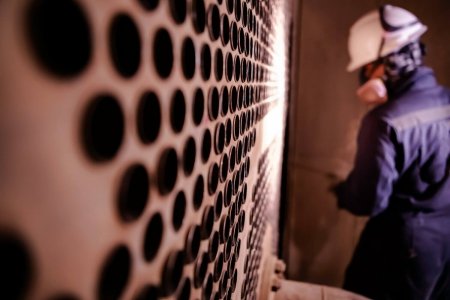
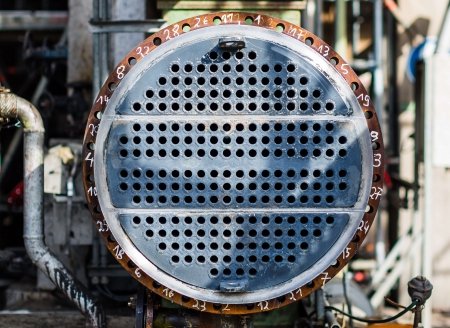
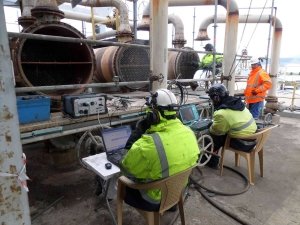
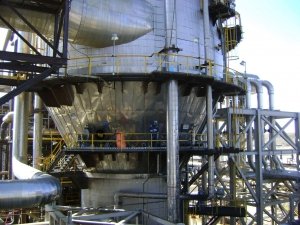
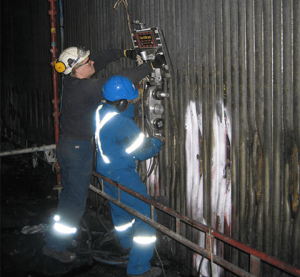
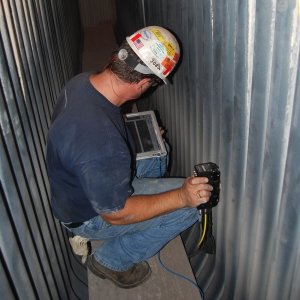
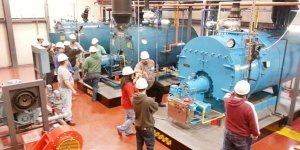
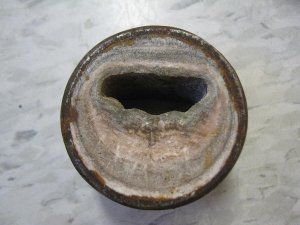
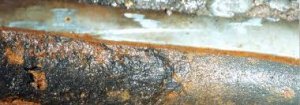
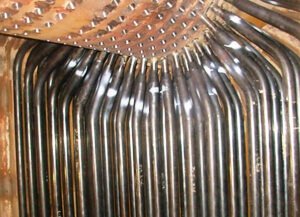
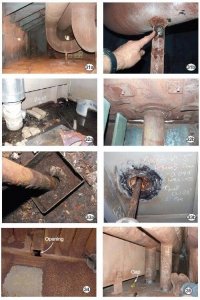
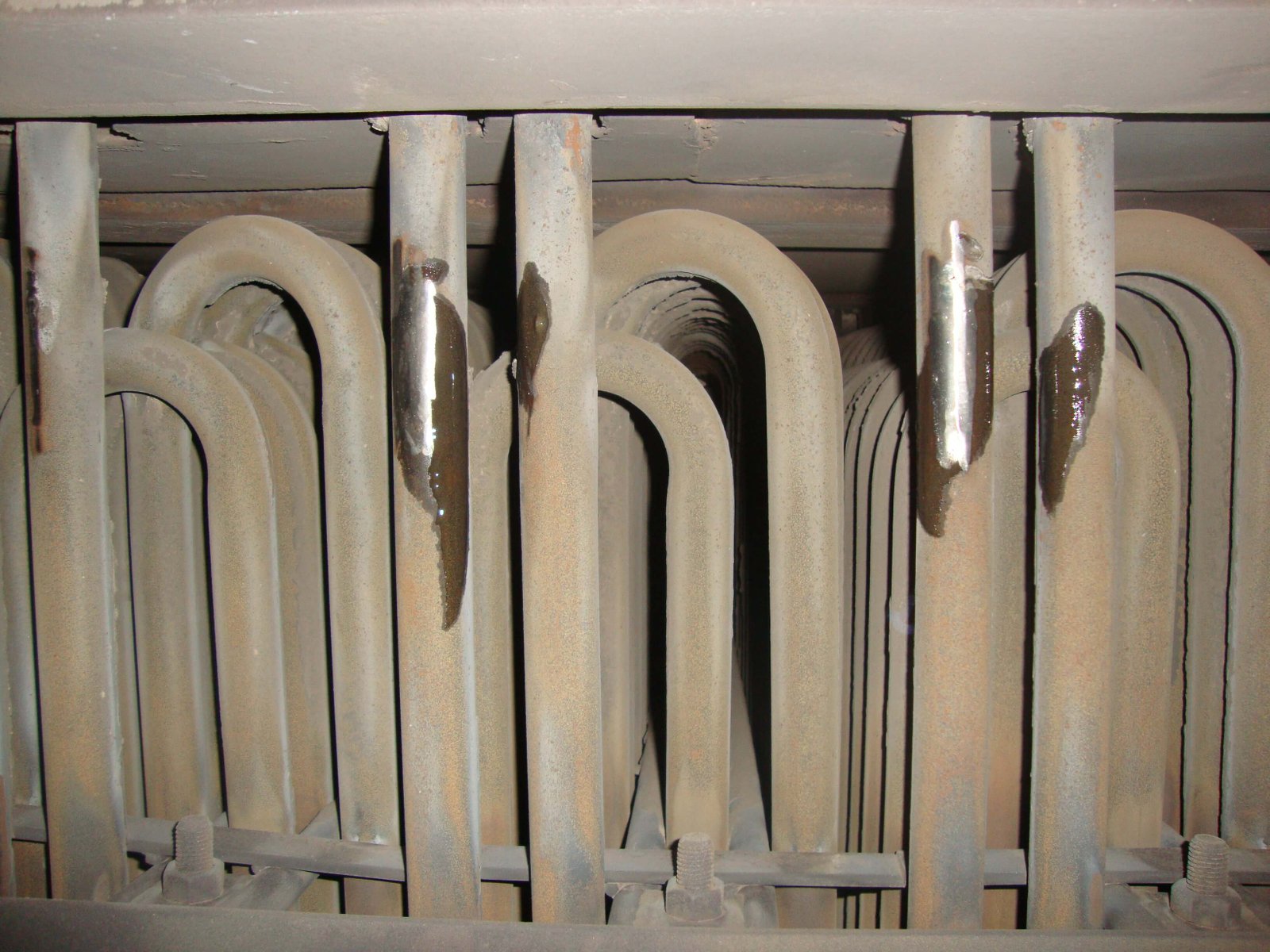
Boiler Inspection

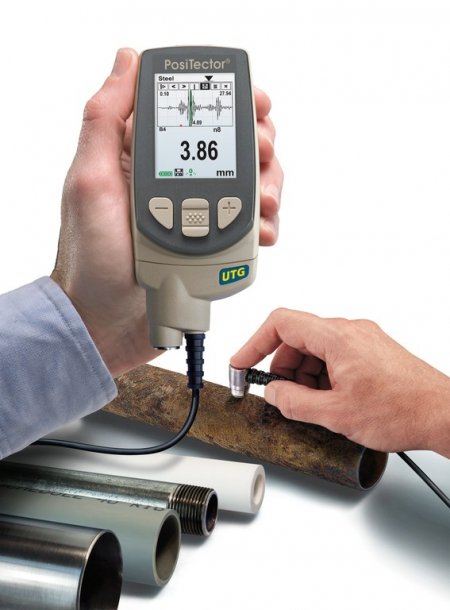
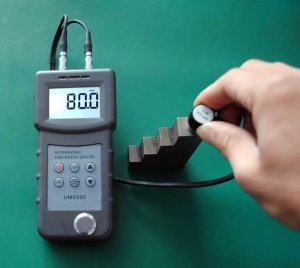
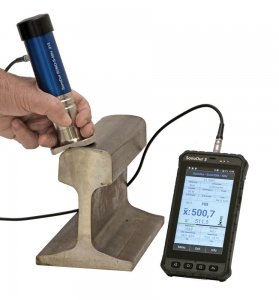
HULL ULTRASONIC THICKNESS GAUGING (UTG)

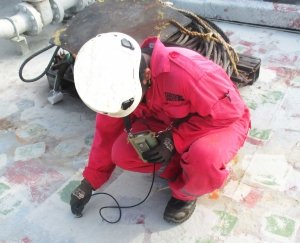
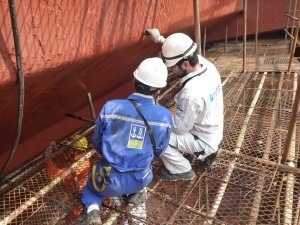
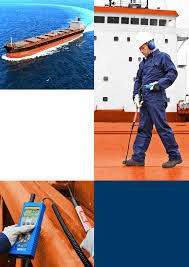
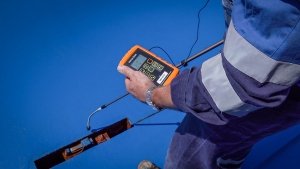
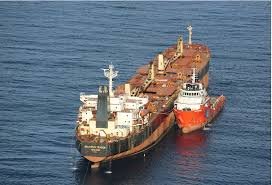
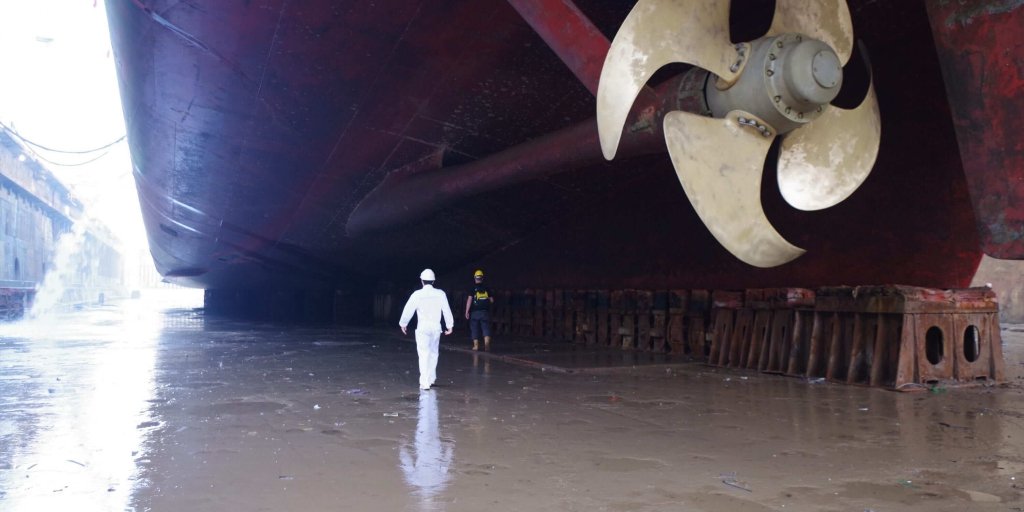
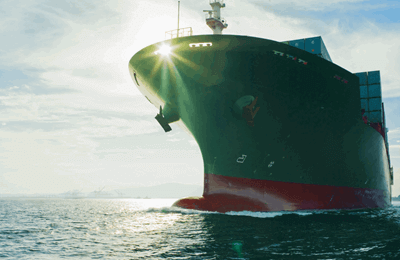
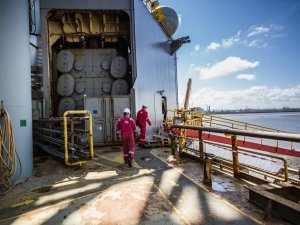
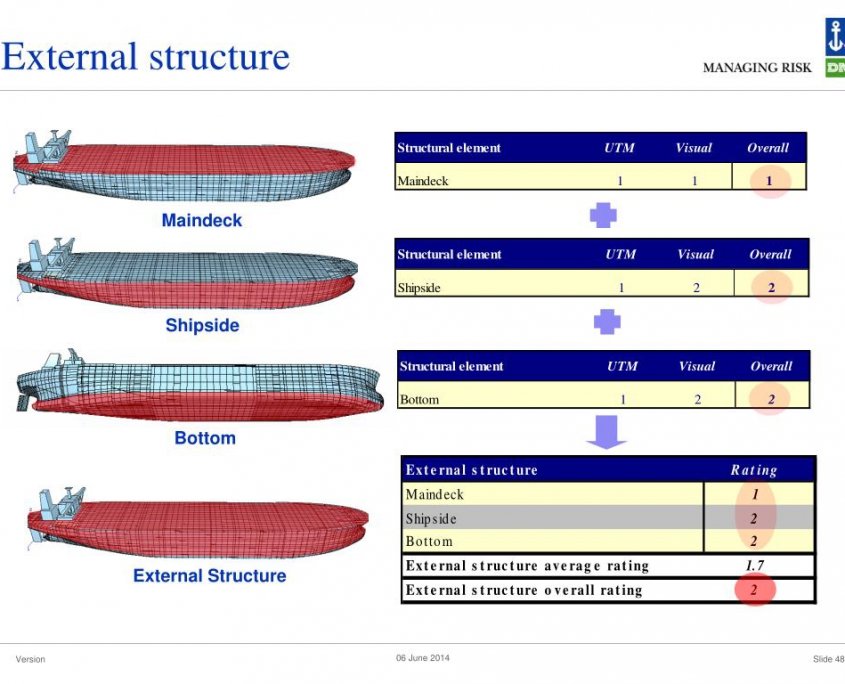
Hull Thickness measurements are fundamental to your ship’s compliance with structural periodical survey requirements. We provide UTM on Ship’s Hull Structures during Ballast Voyage using Riding Crews, Discharge Turnarounds, Alongside Repair Quays in ports and Dry Docks on all types of ships including rafting and Rope access.

Qualitech Testing & Inspection is one of the Leading Ultrasonic Thickness Measurement Company in Singapore and providing Hull Inspection services globally.

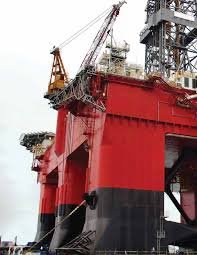
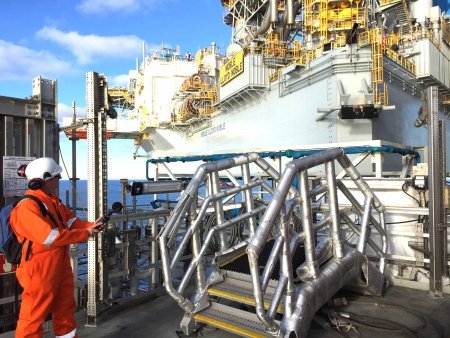
Our Team is professionally equipped to carry out thickness surveys on all kinds of ships such as bulk carriers, general cargos, containers, oil tankers, LPG carriers, LNG vessels, chemical tankers, oil rigs, FPSO vessels and drill ships.

We are able to provide CAP, CAS, Special Survey, Intermediate Survey / Annual Survey & Close up Surveys.
BOTTOM PIT SURVEY

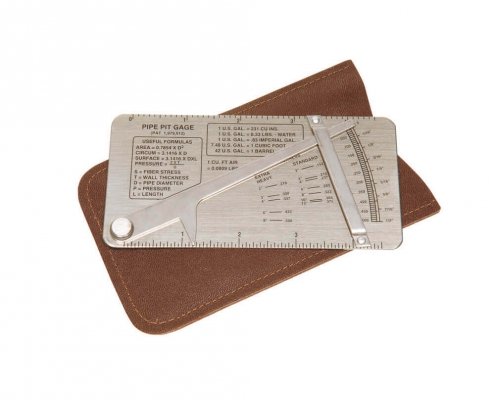
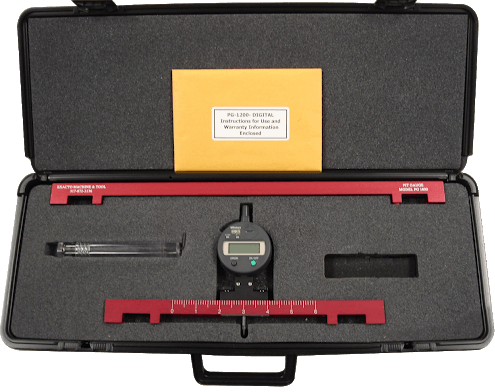
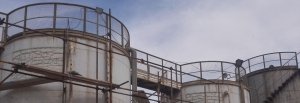
Pitting shall occur mostly in Oil Storage Tanks which contains contamination that corrodes the tanks bottom. Inspection shall be carry out by checking pitting corrosion in each bay, mapping the extent and individual pits, measuring the depth of pits by a depth of pits by a depth gauge / Ultrasonic gauging

VOYAGE INSPECTION

We are able to supply Inspectors to follow the vessel on voyage and carry out inspection on board. This will help the ship Owners save up time and cost. Repair plan and steel weight estimation shall be worked out and submitted to the Ship Owners to plan their budget and vessel repair schedule during dry-docking.

Visual examination and U.T.M gauging of ballast tanks carried out during ballast voyage by the following ways:

  • Ballast Voyage using Riding Crews
  • Voyage using Rafting
  • Alongside Repair Quays in Ports

HULL VISUAL INSPECTION

Hull structure visual inspection is carry out to determine the defective area that are required to be renew and the overall condition of the vessel. The inspectors shall assist the Superintendent in looking out for hull structural defects like Fracture, Crack, Buckling, Serious wastage based on thickness measurement, photography and Steel Weight Estimation Plan shall be submitted to the Ship Owners.

Inspection summary of hull structures including piping in way of tanks, outfitting, anodes condition and coating condition will be submitted to the Ship Owners daily upon completion of the tank inspection.

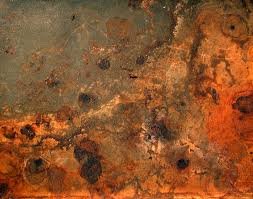
Corrosive areas are mapped out and graded like Heavy corrosion, Patch corrosion, scattered corrosion, Light corrosion, Edge corrosion, heavy scaling etc., The remaining thickness of these steel plates shall be determined by ultrasonic Thickness Measurement in order to find out the actual condition of the steel. Renewal plan on hull structure defects

HATCH COVER LEAK TESTING

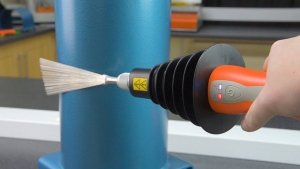
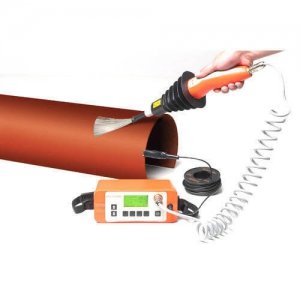
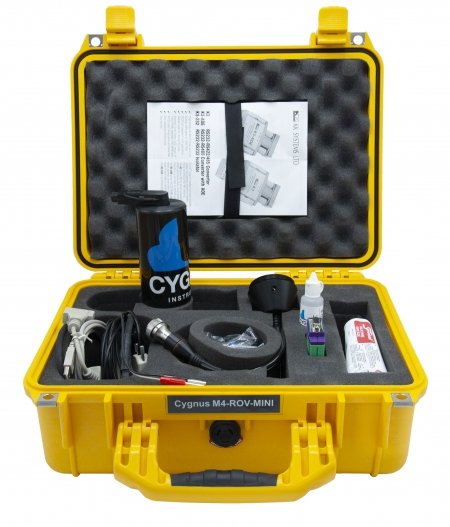
Cygnus Hatch Sure is an ultrasonic leak detector able to perform a quick and effective evaluation of cargo hold hatch covers and door seals to determine water leaks and weather tightness.

The system consists of a battery powered transmitter containing 19 ultrasound emitters (40 kHz). The emitters are arranged to produce an omni-directional sound field, uniformly distributed throughout the cargo hold.

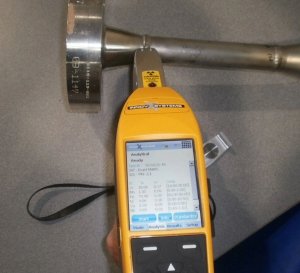
The receiver part of the system displays the sound energy level that passes through gaps in the enclosed cargo hold to enable the location of leaks to be quickly and accurately identified.

ANODE INSPECTION

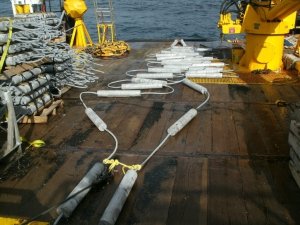
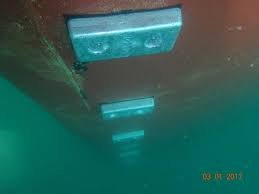
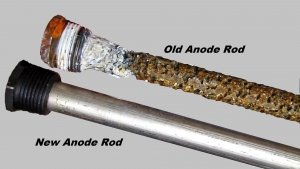
Anodes keep your valuable parts of your vessel from corroding. Extensive growth or worn out anodes don’t provide the protection for your metal parts and those essential parts can start corroding. Regular checks and timely replacement of your anodes will keep your vessel in good shape. We will work with you to determine when and how often your anodes will need to be replaced to provide you with the most cost effective protection to your vessel.

Cathodic protection systems protect a wide range of metallic structures in various environments. Common applications are: steel water or fuel pipelines and steel storage tanks; ship and boat hulls; offshore oil platform and onshore oil well casings; offshore wind farm foundations and metal reinforcement bars in concrete buildings and structures. Another common application is in galvanized steel, in which a sacrificial coating of zinc on steel parts protects them from rust. Cathodic protection can, in some cases, prevent stress corrosion cracking.

MARINE PIPING UT GAUGING

Ultrasonic thickness gauging on Marine & Top Side piping components which has to be done onboard of the FPSO Vessels according to Client Requirement and Class Rquirement.

A-Star Testing & Inspection has procedure which also covers the reporting requirements of UTM measurement that apply to Marine and top side piping components.

In addition to the piping inspection scope we are capable of doing the following inspection and shall be followed separate procedure,

  • a) Internal visual inspection
  • b) Inspection on GRE pipes
  • c) External visual inspection excluding thickness gauging area
  • d) CUI inspection
  • e) Vibrating inspection
  • f) Supplemental inspection
TRACK RECORDS

FPSO NGOMA / FPSO OKHA / FPSO SHELL STONES

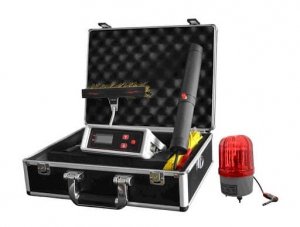
HOLIDAY TESTING

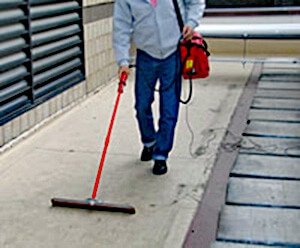
Holiday test or a Continuity test is one of the non destructive test method applied on protective coatings to detect unacceptable discontinuities such as pinholes and voids. The test involves checking of an electric circuit to see if current flows to complete the electrical circuit.

Portable holiday detectors are designed for various pipeline, plant, and other surface applications where the inspection surface remains stationary and the detector is moved over the inspection surface. High voltage detectors are used for thicker surface coatings, such as those used on pipelines and other industrial applications. Low voltage, wet sponge detectors are used for thin film applications.

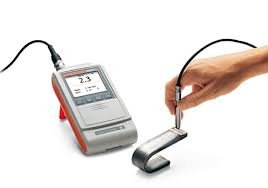
PAINT/ COATING THICKNESS MEASUREMENT

Dry Film Thickness is a critical measurement in the coating application process. It provides vital information as to the expected life of the substrate, the product’s fitness for purpose, its appearance and ensures compliance with a host of International Standards.

TRACK RECORDS

EMAS FPSO / SEMB CORP COGEN

3D LASER SCANNING

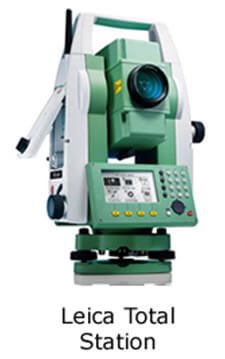
With our customisable and innovative solutions coupled with our driven and dynamic team, A-Star Testing & Inspection (S) Pte Ltd provides the best solution for highly precise measurements in highly complicated environments. Our extensive experience and skills in 3D Laser Scanning have allowed us to offer comprehensive solutions to a wide range of industries. By value-adding through accurate measurements, these information provides critical insights for professionals from a wide range of expertise.

Benefits of 3D Laser Scanning:

Highly accurate information to our engineers, designers, architects and contractors,

Saves both time and money by eliminating the need for costly return visits and minimise the need for construction reworks.

Complete 3D model can be made of the existing conditions in the building with just a few scans

Used for detailed measurements of landscapes, structures and their furnishings and arrangements as well as installations,

Used to survey hard-to-reach areas, determine construction progress and historical preservation.

In shipbuilding, our 3D laser scanners are used to measure complex and extensive ship parts within limited time frames. With such technology, the entire ships or ship parts can be constructed with upmost detail and plans can be made accordingly. Since prefabrication level is high, alteration of parts and maintenance during the assembly phase can be significantly reduced.

Our team of specialized individuals have the capacity to harness the potential of the various scanning data outputs, enabling in-depth digital analysis and manipulation and ultimately, creating 3D models for an even more extensive range of applications. We acknowledge that every client is unique. Thus, at A-Star Testing & Inspection (S) Pte Ltd, we provide customised solutions for you to forge long-lasting relationships. We handle projects of all sizes. If you are unsure how 3D laser scanning can aid your next high definition scanning project or how it can make your course of work more efficient, please do not hesitate to contact us for a discussion.

HULL CLEANING & PROPELLER POLISHING

Underwater vessel maintenance and inspection services

SeaTec offers a truly unique 24/7 global network of dive stations and is to date the only supplier who offers fixed rates for more than 300 different locations. This includes pricing for propeller polishing, hull cleaning and all types of inspections, allowing in-water maintenance to be budgeted and planned for in detail.

Our suppliers are reviewed and audited on a regular basis by our global operations team who also harmonize the output quality of our global network. As an example, our reporting is linked to vessels’ performance optimisation and standardized so that a service conducted in Asia will have the same report used as a service ordered in any another continent.

Based upon the information retrieved from past audits and reviews, SeaTec is an expert knowledge base for global underwater services and can advise on all aspects ranging from equipment to safety and from local in-water conditions to environmental regulations.

Propeller Polishing

The aim of polishing a propeller underwater is to reduce the surface roughness caused by the build-up of marine fouling. A smooth propeller surface is inhospitable to marine organisms and enhances the efficiency of the propeller, in turn optimising the vessel’s performance.

Propeller polishing is either arranged based upon planned intervals or vessel performance but as a rule of thumb, intervals of six to 12 months (depending upon vessel size, trading activity and location) are standard and one of the most common and regular in-water activities conducted globally.

Hull Cleaning

Unlike propeller polishing, hull cleaning is usually difficult to plan for. This is because the paint system is often unpredictable and once fouling starts to build up it is near impossible to pin point. Qualitech advocates cleaning early when slime starts to form rather than when heavy growth such as barnacles start to build up.

A build up of marine fouling such as barnacles or tubeworm can cause turbulence, cavitation and noise, affecting the performance of sonars, speed logs and other hull mounted sensors.

Most of our clients therefore combine the vessel’s performance data with regular in-water hull paint and fouling inspections which are often combined with a propeller polish. This allows information on paint performance to be gathered cost effectively and the decision to arrange for hull cleaning can be made based on accurate and up-to-date information.

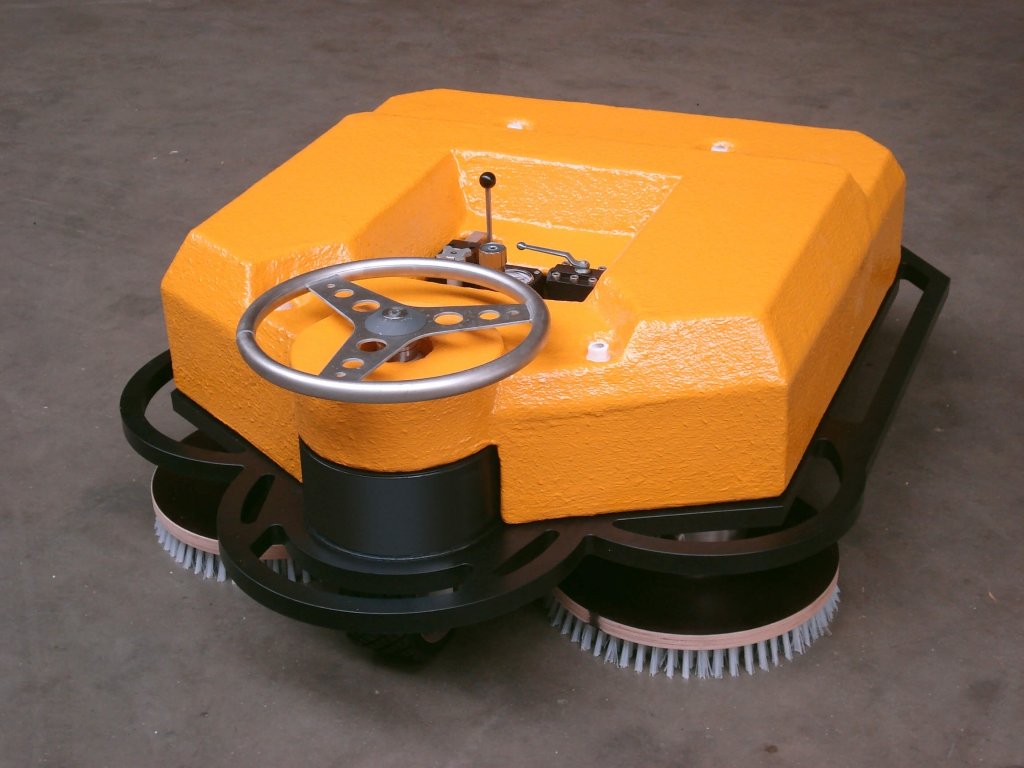
In addition, VISIONARY INSPECTION helps clients make an educated decision on the best technology; cleaning with divers or ROV, brushes or contactless, closed circuit or open circuit.

VISIONARY INSPECTION s hull cleaning and propeller polishing service can result in a hugely positive impact on a vessel’s hydrodynamic performance and fuel consumption.

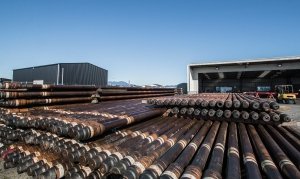
OCTG INSPECTION

  • Stock Verification Survey
  • Rig Inspection
  • OCTG Drill Pipe | Tubular | OES Inspection
  • EMI Inspection
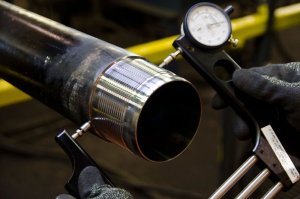
  • Visual Tube Body/ Tread Inspection and OD Gauge
  • Derrick and Mast Inspection
  • Rope Access Inspection

OCTG Inspection [Oil Country Tubular Goods]

Qualitech OCTG Inspectiondivision is a global service provider for inspection, testing and certification services in an oil field industry backed by extensive experienced inspection engineers and technicians, we offers cost effective and timely services to our clients for smooth, safe and profitable operations of their facilities.

Our inspection and testing services includes identification of Potential damage/Deterioration mechanism, Crack identification and thickness monitoring etc.

For rig, pipe and Tubular inspections, we are applying non destructive testing method which will not destroy the testing equipments.

Rig Inspection

Rig inspection includes visual inspection, thickness measurements, magnetic inspection(yoke method) for detection of surface, subsurface cracks of drilling mast, hoisting and drilling equipments, sub base, pipe elevators, slips, tongs, sheaves, weldments of high pressure pipelines.

OCTG Drill Pipe|Tubular|EMI Inspection

Qualitech marine inspection division provides a variety of Drill Pipe/OCTG Inspection Services depending on customers’/Manufactures recommendation and requirements; we have well qualified in house technical manpower that are capable/Qualified for performing inspection ranging from BASIC/API standards to critical well service standards i.e.DS-1/NS-2.

We do visual/dimensional inspection of Drill pipes/Casing/Tubing/BHA tools/HWDPS/Rig parts and Handling equipment’s in order to confirm acceptability as per required standards Eg:-API RP7G/TH Hill DS-1/NS-2 etc.

We have full length EMI inspection pipe surface inspection units from Newtek systems, which are capable of detecting transverse and 3 dimensional flaws such as pits, seams and gouges.We are providing the inspection services to Drilling contractor’s/IOC’S/Rental services/manufacture’s etc, Like-Transocean’s, Ocean rigs, Halls worthy, Ensco etc.

Our certified Drill Pipe Inspection/Tubular Inspection Engineers shall conduct periodic inspection in regular interval of time based on past inspection/failure history and drilling condition.

To assure the quality of drill pipe and equipments Qualitech inspection will provide:

Vendor inspection:

Visual inspection of pipe external and internal surface for possible noticeable damages, such as dents, mashes corrosions/pits etc, tubes are checked for straightness.

Visual Thread Inspection:

Visually evaluated for any damages, dents, corrosion, any mechanical damages, Thread profile gauges are used to estimate the visual gaps at any of the flanks or thread roots.

OD Gauge (Full length):

Full length mechanical measurement of outside diameter is performed for identification of external wear, dents, mashes, slip area and stress induced diameter variations.

Magnetic Particle Inspection (MPI):

Pipe is magnetized with DC magnetizing coil with longitudinal magnetization with for detection of transverse cracks.

Electromagnetic Inspection (EMI):

Full body EMI inspection is used to detect the transverse defects.

Ultrasonic Examination (UT):

Ultrasonic examination of upset areas for detection of transverse and three dimensional flaws on the inside and outside of the tubes.

Hardness Testing:

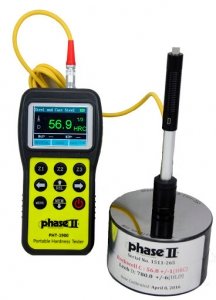
  • Portable hardness tester to perform the hardness testing on pipes.
  • Ultrasonic thickness measurement (Compression wave techniques).
  • Values for downgrading a pipe due to wall thickness loss are set by the customer or inspected to comply with standards conforming to API RP7, T.H.Hill DS1 categories.

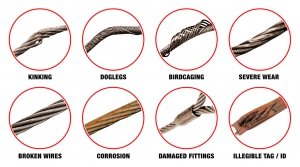
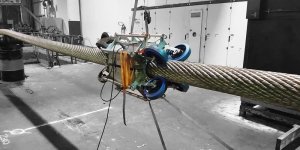
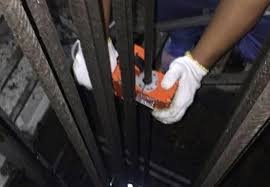
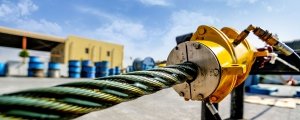
Wire Rope Inspection

Wire rope inspection is about periodic inspection on all cranes and lifting equipment, this includes but is not limited to drilling equipment & tools, pedestal and overhead cranes, ROV / Dive spreads, fixed lifting equipment, lifeboats and life raft launch and recovery systems and loose lifting equipment.

LIFTING GEAR INSPECTION

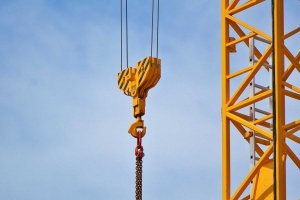
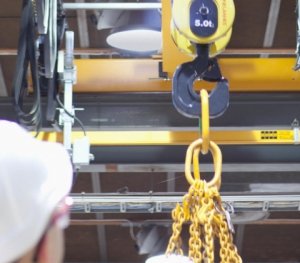
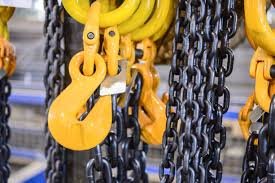
Lifting gear inspection is about periodic inspection on all cranes and lifting equipment, this includes but is not limited to drilling equipment & tools, pedestal and overhead cranes, ROV / Dive spreads, fixed lifting equipment, lifeboats and life raft launch and recovery systems and loose lifting equipment.

All equipment inspected is maintained in a database which conforms with LOLER 1998 procedure and the reports and certificates are generated required by relevant standards.

All our professionals are trained to the highest standard through both internal and external training and undergo regular competency assessment to ensure they are up date with all the relevant procedures and standards. All professionals are rope access trained and certified so accessibility of the equipments or gears at height is not be an issue and the requirement for scaffolding is also be provided.

BOLT TORQUING

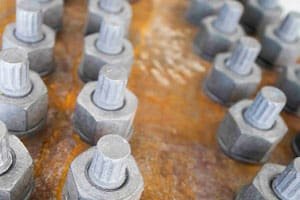
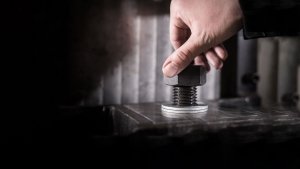
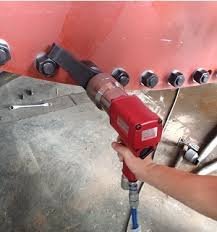
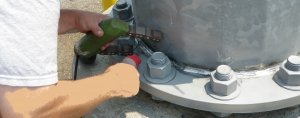
Bolt torquing is means of applying a desired force intended to produce rotation using a predefined standards based upon the given faster. We provides controlled application of torquing and tensioning force for loosening and tightening of the bolts from small jobs to large turnarounds.

Our trained and experience technicians apply standard and proven techniques to assemble, disassemble and pre-load identification and verification of bolted joints and other critical elements or structures. We provide bolt torquing services in conjunction with industrial rope access standards.

Hot Bolting — Applied to free and re-tighten bolts on live piping and equipment, involves replacing of corroded or damaged bolts in order to minimize the time spend on removing bolts during plant shutdowns.Induction Bolt Heating — It reduces the job time up to 7 times compared to traditional resistance heating resulting in significant time saving for the plant.

Induction Nut Heating — Fast and dedicated heating of nuts on reactors, exchangers and hydro-cracker flanges leads to dismantling of components in less span of time.

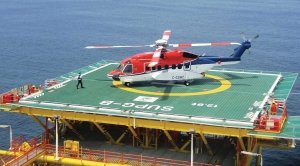
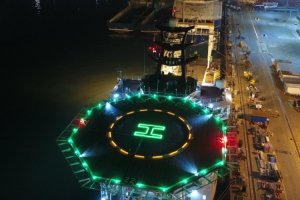
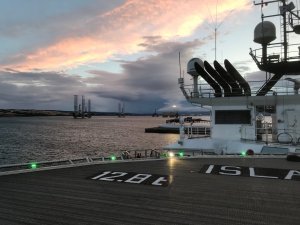
HELIPAD INSPECTION

Rope Access is now an accepted part of the industrial access toolset. It has proved to be a cost effective and versatile solution to over dependence on scaffolding. Our professional rope access technicians benefit from our training facility, designed to simulate industrial environments. They are usually multi-skilled combining Rope Access with Welding, Pipe Fitting, Painting or Inspection Qualifications to maximize their versatility.

LOAD TESTING

Load testing is the process of putting demand on a software system or computing device and measuring its response. Load testing is performed to determine a system’s behavior under both normal and anticipated peak load conditions

We can conduct on-site / off-site load testing for mobile cranes, maritime cranes, davits, hoist, slings, shackles and spreader beams etc. We have a variety and range of calibrated load cells, shackles and hooks for all types of testing configuration. All tests can be certified to existing industrial safety standards. We have a wide range of Water bags and certified counter-weights.

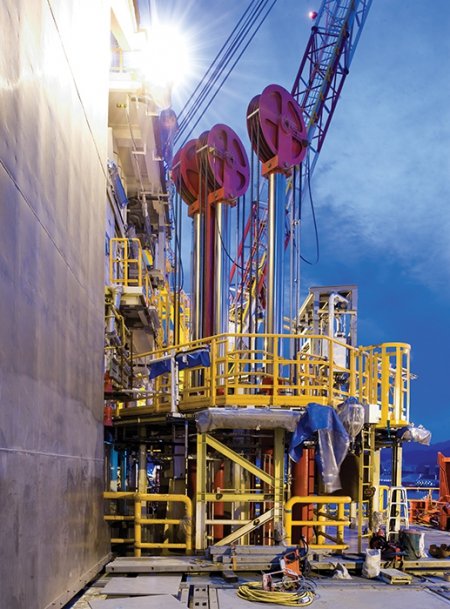
DERRICK INSPECTION

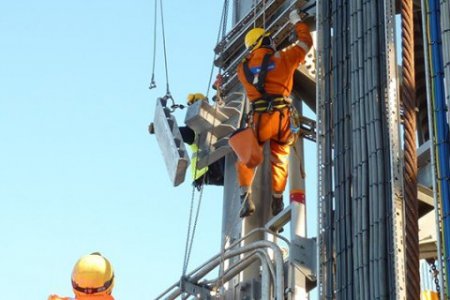
Our Derrick Specialist team has many years of experience in upgrade, maintenance, inspection, repair and DROPS analysis work scopes allowing us to provide fast, proven solutions to your derrick requirements. Working to API 4F and 8C and having an experienced and qualified workforce gives our clients the quality assurance needed to undertake such projects.

we offer a vast range of expertise in Derrick Repairs. We offer full time field supervisors and Rig Building crews with large-scale experience in the derrick industry.

  • a) Derrick Inspection Services
  • b) Derrick Modifications
  • c) Derrick Bolt Tightening / Replacements
  • d) Replacement of Racking Boards / Engineering and Fabrication of Racking Boards
  • e) Derrick Lighting
  • f) Crown Removal / Replacements
  • g) Installation and Removal of all Traveling Equipment
  • h) Derrick Washing, Blasting, and Painting

BOTTOM PIT SURVEY

SPECIAL PERIODICAL SURVEY

The Special Periodic Survey for intermediate or five-yearly classification requirements are a critical and specialized work scope that requires approval as an approved service provider for all Hull Thickness Gauging by the major classification societies such as ABS, DNV and Lloyd’s. Our SPS services give clients the peace of mind that the inspection will be thorough, correctly reported and, if required, we can perform any necessary repairs to ensure recertification. Our inspectors are experienced, professional and highly trained to be proficient in current techniques and standards.

Top Side Survey

The work scope includes surveys of the hull, tanks, deck, leg well areas, legs etc.

Leg Survey

In addition to Visual Inspection, we will conduct Non-Destructive Testing on all critical joints and members to detect internal faults to certify the vessel as required by the authorities.

UWILD

Underwater Inspection using MPI and Eddy Current or ACFM.

Drops Inspection

The Dropped Objects Prevention Scheme (DROPS) is an industry-wide initiative focused on preventing dropped objects, with the ultimate goal of delivering a second nature dropped objects prevention strategy across our industry.

Within the oil and gas industry, everyone knows the potential cost of a dropped object. A thorough DROPS Inspection not only prevents equipment damage and lost production, it also saves lives. The problem is common across the industry, across all regions, sectors and disciplines.

We A-Star Testing & Inspection use experienced inspection personnel, trained specifically to identify and report the Dropped Object risks, implement corrective actions and develop an easy to use continuous inspection plan for the asset. These activities can be integrated into parallel work scopes to optimize the time spent in the area.

To raise awareness of potential dropped objects

To explore methods for the control and prevention of dropped objects

To recognize your personal responsibilities for the prevention of dropped objects

Eliminate injury to people and damage sustained to equipment due to dropped objects throughout Industry.

Ultimately to deliver a „second-nature‟dropped objects prevention strategy

"Any object that falls from its previous static position under its own weight"

RADIOGRAPHY TESTING

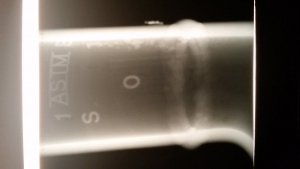
In radiographic testing, the part to be inspected is placed between the radiation source and a piece of radiation sensitive film. The radiation source can either be an X-ray machine or a radioactive source. The radiation that passes through the part will expose the film and forms a shadow graph of the part. The film darkness (density) will vary with the amount of radiation reaching the film through the test object where darker areas indicate more exposure (higher radiation intensity) and lighter areas indicate less exposure (higher radiation intensity).

APPLICATIONS:

  • Weld inspection – Structural / Piping
  • X-Rays, Gamma Rays (Iridium 192, Selenium 75, Cobalt 60)
  • SCAR Radiography, Close Proximity Radiography
  • Corrosion Under Insulation (CUI), Profile Radiography
  • Casting / Forgings / Regulators

PERSONNEL QUALIFICATIONS:

ISO 9712 ( PCN, RTC, CSWIP), ASNT Level 2/3

ULTRASONIC TESTING

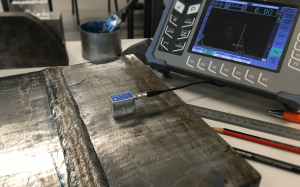
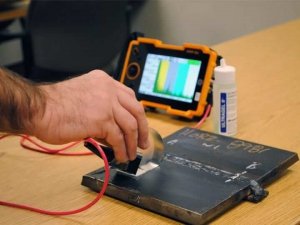
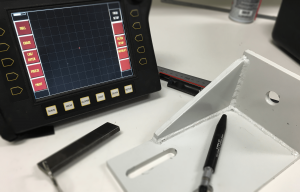
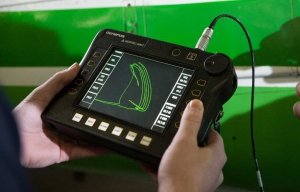
Ultrasonic Testing (UT) uses high frequency sound energy to conduct examinations and make measurements. Ultrasonic inspection can be used for flaw detection/evaluation, dimensional measurements, material characterization, and more. To illustrate the general inspection principle, a typical pulse/echo inspection configuration as illustrated below will be used.

APPLICATIONS:

  • Weld inspection – Structural / Piping
  • Lamination Checking in Plates/Pipes
  • Casting / Forgings / Valves

PERSONNEL QUALIFICATIONS:

ISO 9712 ( PCN, RTC, CSWIP), ASNT Level 2/3

MAGNETIC PARTICLE TESTING

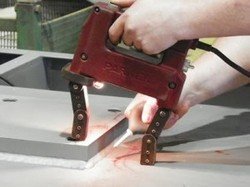
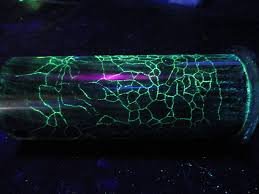
Magnetic particle inspection (MPI) is a non destructive testing method used for defect detection in magnetic materials. MPI is fast and relatively easy to apply, and part surface preparation is not as critical as it is for some other NDT methods. These characteristics make MPI one of the most widely utilized non destructive testing methods.

APPLICATIONS:

  • Weld inspection – Structural / Piping
  • Casting / Forgings / Valves

PERSONNEL QUALIFICATIONS:

ISO 9712 ( PCN, RTC, CSWIP), ASNT Level 2/3

PENETRANT TESTING

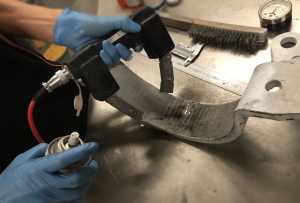
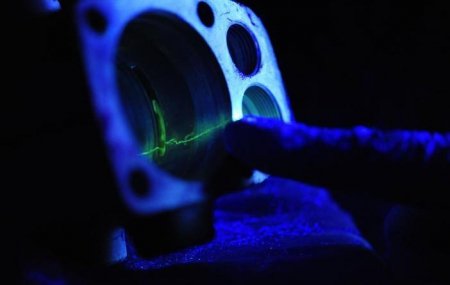
Liquid penetrant inspection is a method that is used to reveal surface breaking flaws by bleed out of a coloured or fluorescent dye from the flaw. The technique is based on the ability of a liquid to be drawn into a “clean” surface breaking flaw by capillary action.

APPLICATIONS:

  • Weld inspection – Structural / Piping
  • Casting / Forgings / Valves

PERSONNEL QUALIFICATIONS:

ISO 9712 ( PCN, RTC, CSWIP), ASNT Level 2/3

EDDY CURRENT TESTING (ECT – WELD INSPECTION)

Eddy current testing is a non-destructive testing method that uses electromagnetic induction to detect flaws in conductive materials. It is particularly effective for detecting surface and near-surface defects in welds and other critical areas.

APPLICATIONS:

  • Weld inspection – Structural / Piping
  • Casting / Forgings / Valves
  • Painted Surface
  • Jack Up Rig, Semi Submersible Rigs, Marine & Offshore Structures

PERSONNEL QUALIFICATIONS:

ISO 9712 ( PCN, RTC, CSWIP), ASNT Level 2/3

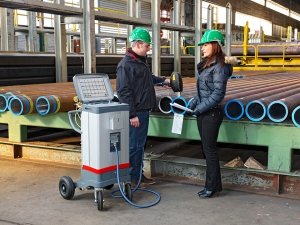
POSITIVE MATERIAL IDENTIFICATION (PMI-XRF)

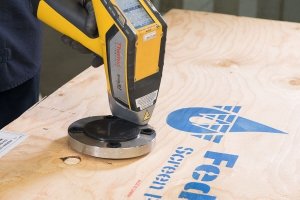
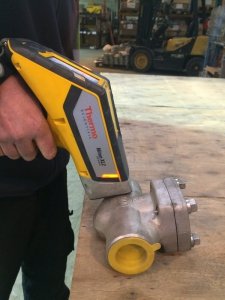
Positive Material Identification is a well established analytical materials testing and materials identification technique used throughout industrial plant as well as within the metal assembly and component manufacturing industries. It guarantees a material’s elemental composition as required for safety compliance and quality control.

APPLICATIONS:

  • For Materials other than Carbon Steel
  • Material Identification, sorting out and confirmation

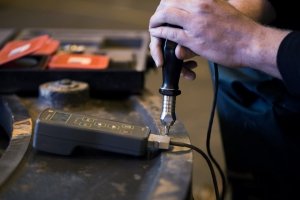
POSITIVE MATERIAL IDENTIFICATION (PMI-OES)

PMI-Arc is a well established analytical materials testing and materials identification technique used throughout industrial plant as well as within the metal assembly and component manufacturing industries. It guarantees a material’s elemental composition as required for safety compliance and quality control.

APPLICATIONS:

  • For Materials other than Carbon Steel
  • Material Identification, sorting out and confirmation

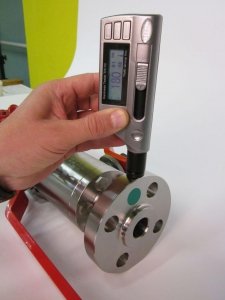
HARDNESS TESTING

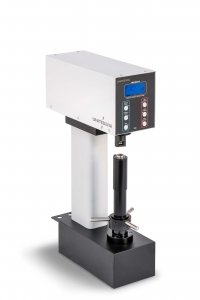
Hardness is a characteristic of a material, not a fundamental physical property. It is defined as the resistance to indentation, and it is determined by measuring the permanent depth of the indentation. More simply put, when using a fixed force (load)* and a given indenter, the smaller the indentation, the harder the material.

APPLICATIONS:

  • Verification of Hardness after PWHT
  • Material Hardness verification after machining

VISUAL INSPECTION – (VIDEOSCOPE)

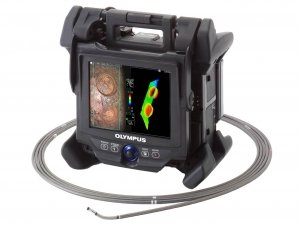
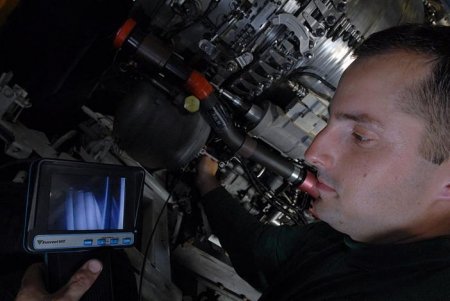
Visual inspection, with or without optical aids, is the original method of NDT. Many defects are surface-breaking and can be detected by careful direct visual inspection. Optical aids include low-power magnifiers, microscopes, telescopes and also specialised devices such as boroscopes, endoscopes and other fibre-optic devices for the inspection of restricted access areas. These devices can also be used with television camera systems. Much of the success of visual inspection depends on the surface condition and the lighting arrangements.

APPLICATIONS:

  • Internal Pipe Weld Root Inspection
  • Blockage, cleanliness and condition inspection
  • Pressure vessel internal inspection

PERSONNEL QUALIFICATIONS

ISO 9712 ( PCN, RTC, CSWIP), ASNT Level 2/3

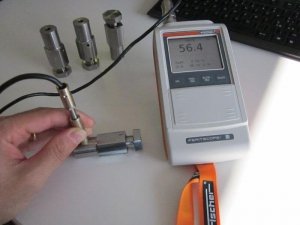
FERRITE INSPECTION

In the petrochemical sector, in off-shore oil producing facilities and in steel construction: Fast and non-destructive determination of the ferrite content in austenitic and duplex steel with an acquisition of all magnetizable portions of a structure, i.e., in addition to delta ferrite also stress-induced martensite or other ferritic phases.

APPLICATIONS:

  • Ferrite content to check in Austenitic Steel, Duplex Steel.

HOLIDAY TESTING

Holiday test or a Continuity test is one of the non destructive test method applied on protective coatings to detect unacceptable discontinuities such as pinholes and voids. The test involves checking of an electric circuit to see if current flows to complete the electrical circuit.

Portable holiday detectors are designed for various pipeline, plant, and other surface applications where the inspection surface remains stationary and the detector is moved over the inspection surface. High voltage detectors are used for thicker surface coatings, such as those used on pipelines and other industrial applications. Low voltage, wet sponge detectors are used for thin film applications.

PAINT/ COATING THICKNESS MEASUREMENT

Dry Film Thickness is a critical measurement in the coating application process. It provides vital information as to the expected life of the substrate, the product’s fitness for purpose, its appearance and ensures compliance with a host of International Standards.

TRACK RECORDS

EMAS FPSO / SEMB CORP COGEN

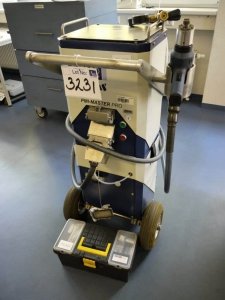
PHASED ARRAY ULTRASONIC TESTING (PAUT)

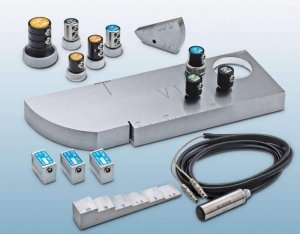
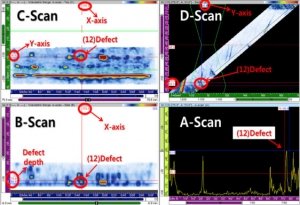
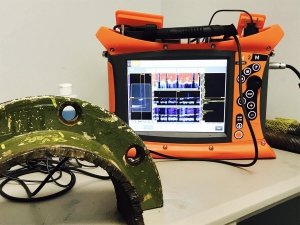
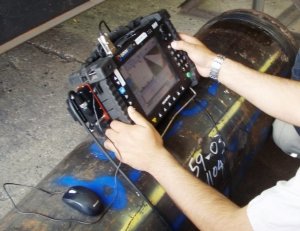
An array transducer is simply one that contains a number of separate elements in a single housing, and phasing refers to how those elements are sequentially pulsed. A phased array system is normally based around a specialized ultrasonic transducer that contains many individual elements (typically from 16 to 256) that can be pulsed separately in a programmed pattern. These transducers may be used with various types of wedges, in a contact mode, or in immersion testing.

APPLICATIONS:

  • Weld inspection – Structural / Piping
  • Corrosion Mapping
  • High Temperature PAUT up to 200°C (Weld Inspection / Corrosion Mapping)
  • PAUT in lieu of Radiography Testing (ASME Sec VIII, API 620, ASME B31.3, B31.1)

PERSONNEL QUALIFICATIONS

ISO 9712 ( PCN, RTC, CSWIP), ASNT Level 2/3

TIME OF FLIGHT DIFFRACTION (TOFD)

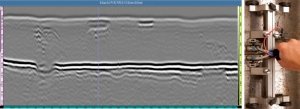
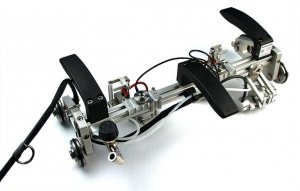
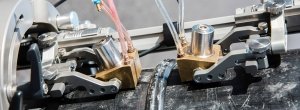
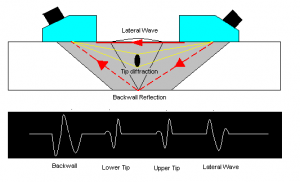
Although time-of-flight diffraction (TOFD) can be used for a variety of applications, its primary use is rapid weld testing of circumferential and axial weld seams, also known as perpendicular TOFD scanning. Since the introduction of TOFD in the 1970s, the use of this reputed reliable non destructive testing technique has steadily increased. Manual execution is possible with TOFD, however, it is most commonly performed in combination with a recording device, that is, an encoder or industrial scanner. To achieve code compliance in North America, TOFD is often coupled with pulse-echo or phased array techniques in order to cover the root and cap regions of the weld.

APPLICATIONS:

  • Weld inspection – Structural / Piping
  • ToFD in lieu of Radiography Testing (ASME Sec VIII, API 620, ASME B31.3, B31.1)

PERSONNEL QUALIFICATIONS

ISO 9712 ( PCN, RTC, CSWIP), ASNT Level 2/3

ALTERNATING CURRENT FIELD MEASUREMENT TESTING (ACFM)

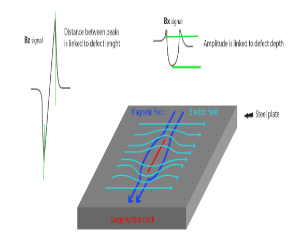
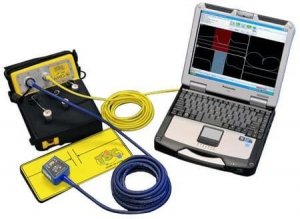
ACFM® is an electromagnetic inspection technique that introduces an alternating current into the surface of the component to detect surface-breaking cracks. The presence of a crack disturbs the electromagnetic field and the return signal is instantaneously converted by advanced mathematical techniques, so that the operator is alerted to the presence of a defect. Immediate defect sizing and recording is a major benefit compared to alternative NDT methods.

APPLICATIONS:

  • Marine offshore Structures/ Offshore Platforms/Rigs/Semi Sub Rigs/ Barges
  • It requires less cleaning compared to MPI/PT/ECT
  • When data requires to keep for records/re review/cross check
  • No need to remove paint / Fast method

PERSONNEL QUALIFICATIONS

ISO 9712 ( PCN, RTC, CSWIP), ASNT Level 2/3

OPEN VISION

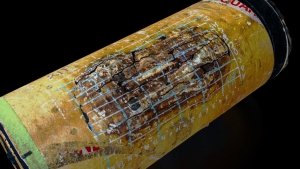
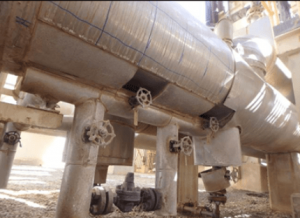
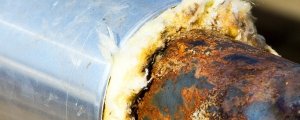
Corrosion under insulation (CUI) is the corrosion of piping and vessels that occurs beneath insulation as a result of water penetration. The water can come from rain water, leakage, deluge system water, wash water, or sweating from temperature cycling or low temperature operation such as refrigeration units.

Unfortunately, because the corrosion is hidden under the insulation, CUI tends to remain undetected until the insulation is removed for inspection or when leaks occur. CUI is a common problem across many industries, including refining, petrochemical, power, industrial, onshore and offshore industries.

INSPECTION METHODS

  • Long Range UT
  • Computed Radiography (CRT)
  • Digital Radiography (DRT)
  • Profile Radiography
  • Real Time Radiography (Open Vision)

PERSONNEL QUALIFICATIONS

ISO 9712 ( PCN, RTC, CSWIP), ASNT Level 2/3

TRACK RECORD

  • Exxom Mobil (Open Vision)
  • Shell Eastern Petroleum, Bukom Terminal (Open Vision, Profile Radiography)
  • MISC Malaysia (Computed Radiography)

Guided Wave UT

Corrosion under insulation (CUI) is the corrosion of piping and vessels that occurs beneath insulation as a result of water penetration. The water can come from rain water, leakage, deluge system water, wash water, or sweating from temperature cycling or low temperature operation such as refrigeration units.

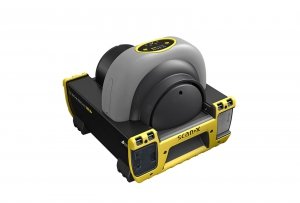
COMPUTER RADIOGRAPHY TESTING (CRT)

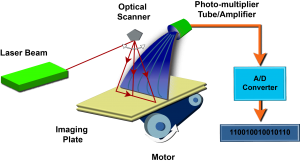
Computed Radiography (CR) is the production of a digital image by using a Phosphor Imaging Plate (IP) in place of conventional film.The Image (storage) Plate (IP) is exposed with X-ray or Gamma radiation, which causes the IP phosphor layer in the plate to store the X-ray image. During the reading process of the plate in the scanner, a focused laser beam triggers the release of the stored image data in the form of visible light. The emitted light is detected, captured, and converted into electrical signals which are digitized and finally displayed as a digital image on the PC monitor. The internal in-line eraser purges the residual data from the IP, which is then ready for the next exposure.

APPLICATIONS

  • Corrosion, Pitting in Insulated Pipelines
  • Process Pipelines Corrosion Findings
  • No need to remove insulations
  • Weld Inspection for Quick Review Profile Radiography for Corrosion Findings

PERSONNEL QUALIFICATIONS

ISO 9712 ( PCN, RTC, CSWIP), ASNT Level 2/3

TRACK RECORD

  • EMAS Offshore, MISC Malaysia, Cochin Refineries India
  • SembCorp

DIGITAL RADIOGRAPHY (DRT)

An X-ray beam is focused at the imaging detector. In medical applications the anatomy of the patient that needs to be examined is positioned in front of the detector. As the beam passes through the anatomy and hits the detector it is filtered by a scintillator.

The scintillator comes in different substrate materials and in this application it is most often Cesium Iodide (CsI) or Gadolinium Oxysulphide or Gaddox (GdOS). The scintillator emits light from exposure to the X-ray beam and is deflected by a mirror on to a lens which focuses the light onto the 9 or 16 Megapixels of the CCD dependant of the platform of IDC technology.

APPLICATIONS

  • Corrosion, Pitting in Insulated Pipelines
  • Process Pipelines Corrosion Findings
  • No need to remove insulations
  • Weld Inspection for Quick Review Profile Radiography for Corrosion Findings

PERSONNEL QUALIFICATIONS

ISO 9712 ( PCN, RTC, CSWIP), ASNT Level 2/3

SCAR RADIOGRAPHY

Small Controlled Area Radiography (SCAR) SCAR-a directional gamma radiography system for use in areas congested with workers, confined spaces, or where radiation output must be kept to an absolute minimum so not to disrupt normal operations. SCAR utilizes a compact exposure device with built-in collimation to enhance the ability for radiographic inspection to be performed more safely and with equal, if not higher, levels of productivity compared to traditional gamma exposure devices. SCAR allows for smaller restrictive barricades, eliminates flash dose to radiographic personnel, and may increase the overall productivity of radiography crews when utilized in congested areas where increased manpower is present, such as plant shutdowns.

APPLICATIONS

  • Radiation Barricade distance only 5M Radius
  • No need to Stop other activities
  • Can be used with Se75 Source which gives high quality Radiographs

PERSONNEL QUALIFICATIONS

ISO 9712 ( PCN, RTC, CSWIP), ASNT Level 2/3

TRACK RECORDS:

  • TIMAS OFFSHORE, EMAS Offshore, Keppel Group
  • Sembawang Shipyard

ACOUSTIC EMISSION

Acoustic Emission Testing (AET) is a Non-Destructive Testing (NDT) method that is used to analyse emitted sound waves caused by defects or discontinuities. These acoustic waves are induced by small deformations, corrosion or cracking, which occur prior to structure failure. It is therefore possible, with AET, to locate structural defects and to monitor the propagation and development of discontinuities.

APPLICATIONS

  • Storage tank Bottom floor inspection / Full Integrity Testing
  • No need to evacuate the load from the storage tank
  • Pressure vessels, Gas Bottles Integrity Testing without evacuating load

PERSONNEL QUALIFICATIONS

ISO 9712 ( PCN, RTC, CSWIP), ASNT Level 2/3

TRACK RECORDS:

  • Storage Tank Floor Bottom Inspection
  • FRP vessels

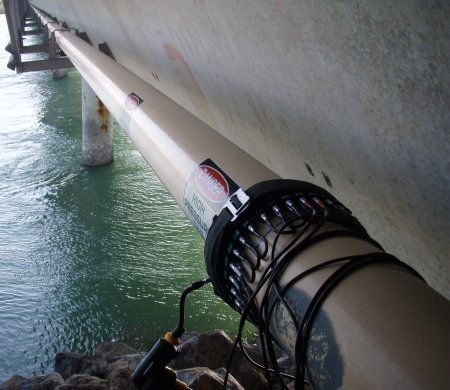
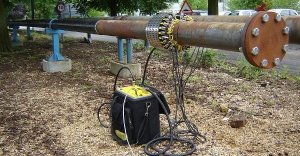
LONG RANGE UT (GUIDED WAVE ULTRASONIC TESTING)

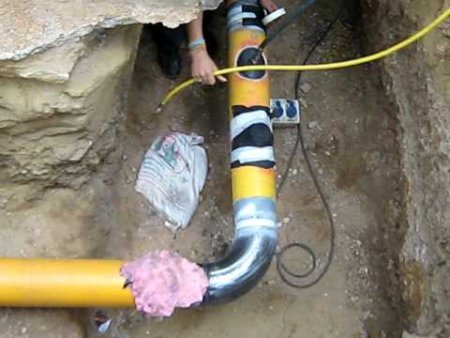
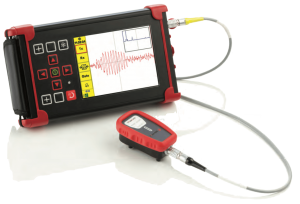
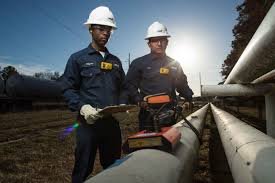
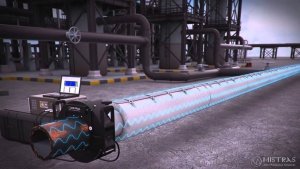
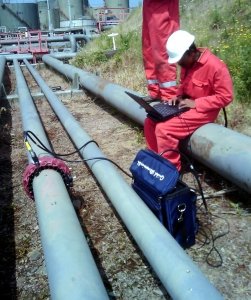
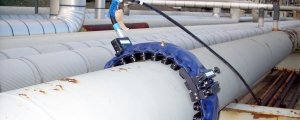
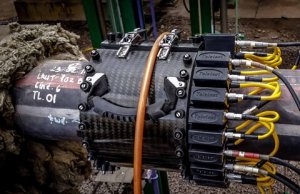
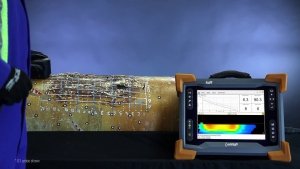
The Guided Wave technology uses a low frequency guided ultrasound waves traveling along the pipe, providing 100% coverage of the pipe length. In normal application, tens of meters of piping may be inspected from a single location. Effected areas are precisely located in terms of distance from the transducer ring and highlighted for further local examination by visual or other conventional NDT methods. This non-destructive screening technique can be used without extensive scaffolding and minimizes the requirement of removing insulation along the piping.

APPLICATIONS

  • Corrosion, Pitting in Insulated Pipeline
  • Corrosion, Pitting Buried Underground Pipeline
  • Pressure vessels, Gas Bottles Integrity Testing without evacuating loadProcess Pipelines Corrosion Findings
  • No need to remove insulations
  • No need to excavate full length of pipes

PERSONNEL QUALIFICATIONS

ISO 9712 ( PCN, RTC, CSWIP), ASNT Level 2/3

TRACK RECORDS:

  • VOPAK Terminal
  • SembCorp

REAL TIME RADIOGRAPHY (OPEN VISION)

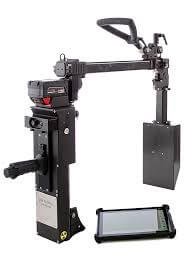
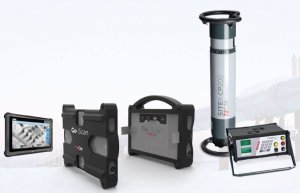
OpenVisionTM is a light weight live video X-ray imaging system specifically designed for hand-held inspection. It includes a highly sensitive radiographic imager and battery-operated 70kV x-ray tube designed for portable field operation. The proprietary intensified video imaging system captures images and displays them on a hand held LCD viewer, head mounted display, or portable recorder with LCD display in real-time.

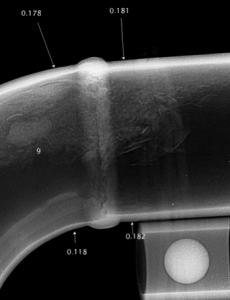
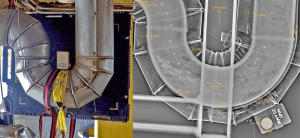
This portable system is commonly used for Corrosion Under Insulation inspection. Corrosion Under Insulation (CUI) inspection is a term used to address the inspection of areas that exist between the insulation material and the exterior wall of the pipe. Stripping down the insulation and searching for problem spots is a costly and time consuming process. The OpenVisionTM OVCF-NDT X-ray system allows you to inspect lengths of pipe work, bends and joints in a matter of minutes, pinpointing any defects without removing the insulation.

APPLICATIONS

  • Corrosion Under Insulation on Piping
  • General Visual Inspection Under Insulated Pipes

TRACK RECORDS:

  • Shell Eastern Petroleum, Shell Bukom, Singapore
  • Exxon Mobil
  • EMAS Offshore

CORROSION UNDER INSULATION (CUI)

Corrosion under insulation (CUI) is the corrosion of piping and vessels that occurs beneath insulation as a result of water penetration. The water can come from rain water, leakage, deluge system water, wash water, or sweating from temperature cycling or low temperature operation such as refrigeration units.

Unfortunately, because the corrosion is hidden under the insulation, CUI tends to remain undetected until the insulation is removed for inspection or when leaks occur. CUI is a common problem across many industries, including refining, petrochemical, power, industrial, onshore and offshore industries.

INSPECTION METHODS

  • Long Range UT
  • Computed Radiography (CRT)
  • Digital Radiography (DRT)
  • Profile Radiography
  • Real Time Radiography (RTR)

PERSONNEL QUALIFICATIONS

ISO 9712 ( PCN, RTC, CSWIP), ASNT Level 2/3

TRACK RECORDS:

  • Exxon Mobil (Open Vision)
  • MISC Malaysia (Computed Radiography)
  • Shell Eastern Petroleum, Bukom Terminal Open Vision, Profile Radiography
  • Our Credentials

PROFILE RADIOGRAPHY

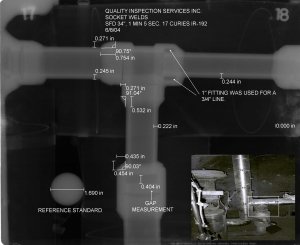
Profile Radiography, technically called Tangential radiography is a radiographic technique used for the determination of remaining pipe wall thickness. Wall thickness measurement in processing pipe is necessary to determine loss of material due corrosion under insulation and internal erosion. Thickness measurement would assist the engineer in making decisions with regards to the safety of plant, environment and personnel and also for insurance purposes.

INSPECTION METHODS

  • Conventional Gamma Radiography
  • Conventional X-Radiography
  • Digital Radiography (DRT)
  • Computed Radiography (CRT)

PERSONNEL QUALIFICATIONS

ISO 9712 ( PCN, RTC, CSWIP), ASNT Level 2/3

TRACK RECORDS:

  • Shell Eastern Petroleum, Bukom Terminal (Open Vision, Profile Radiography)
  • MISC Malaysia (Computed Radiography)
  • Our Credentials

HIGH TEMPERATURE PHASED ARRAY ULTRASONIC TESTING (PAUT)

Designed to address the requirements of elevated temperature corrosion and weld inspections, these solution packages are targeted at the reduction or elimination of shutdown times in production environments. This series is designed to operate up to 200°C. The TempMaster Gold solution package has been designed to include all the required equipment to ensure safe and reliable operation within this temperature range. The Gold Series high temperature material has a safety margin to accommodate some temperature fluctuation.

FEATURES

  • Phased array inspections at temperature up to 200°C
  • No shut down required while performing weld inspections and corrosion mapping
  • Automated scanning limits direct contact with parts at elevated temperatures
  • Multiple wedge sizes available for various wall thicknesses
  • Cooling systems prevent damage to the scanner, wedge and probe
  • Encoded automated and manual scanning for consistency and repeatability

PERSONNEL QUALIFICATIONS

ISO 9712 ( PCN, RTC, CSWIP), ASNT Level 2/3

CRAWLER UT GAUGING

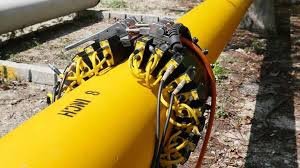
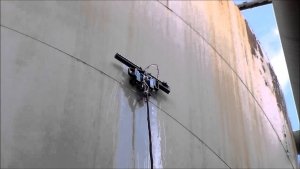
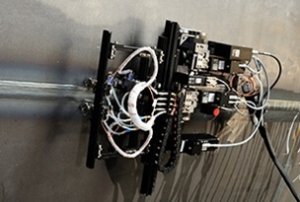
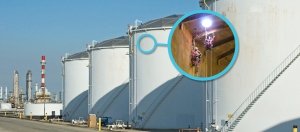
Battery operated, encoded crawler with 5 MHz, dry coupled wheel probe. Supplied with a 50 metre umbilical cable for access to the top of the highest storage tanks methods. The Scorpion is a rugged remote access ultrasonic (UT) crawler designed for cost effective ultrasonic inspection on ferro-magnetic structures such as storage tanks, vessels and offshore installations without the need for costly scaffolding or rope access associated with UT thickness gauging.

  • High resolution B-scan image
  • Simple profile, or full amplitude display
  • Permanently stored data for recall to assist with RLA & RBI trend forecasting
  • No couplant or paint removal required

APPLICATIONS

  • Tank Thickness Gauging without Rope Access / Scaffolding
  • Pressure vessels and offshore installations Thickness Gauging

PERSONNEL QUALIFICATIONS

ISO 9712 ( PCN, RTC, CSWIP), ASNT Level 2/3

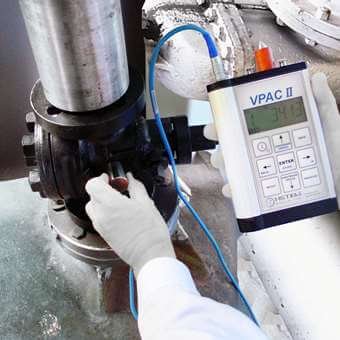
HIGH TEMPERATURE UT THICKNESS GAUGING

Although most ultrasonic flaw detection and thickness gaging is performed at normal environmental temperatures, there are many situations where it is necessary to test a material that is hot. This most commonly happens in process industries, where hot metal pipes or tanks must be tested without shutting them down for cooling, but also includes manufacturing situations involving hot materials, such as extruded plastic pipe or thermally molded plastic immediately after fabrication, or testing of metal ingots or castings before they have fully cooled. This application note contains quick reference information regarding selection of high temperature transducers and couplants, and important factors regarding their use. It covers conventional ultrasonic testing of materials at temperatures up to approximately 500°C.

APPLICATIONS

  • Petro chemical and process industries – Pre Shutdown & Maintenance

PERSONNEL QUALIFICATIONS

ISO 9712 ( PCN, RTC, CSWIP), ASNT Level 2/3

INFRARED THERMOGRAPHY

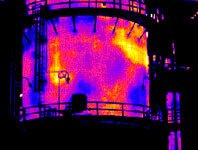
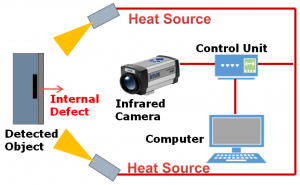
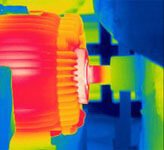
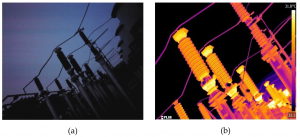
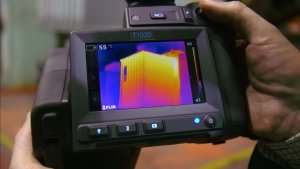
IR Thermography is based on the concept that, the object which has absorbed heat or at some temperature value higher than the ambient or surrounding environment will emit infrared radiation (heat flux) at different wavelength. The IR thermography method uses a thermal image scanner or camera to record the heat flux which was emitted as infrared radiation. The thermal image describes the distribution of the surface temperature that will detect the defects in the subsurface of the material tested. Because of different thermal coefficients between the sample surface and the ambient, the heat will flow in different ways (thermal wavelength) and also at different rates and thus results in a different temperature distribution on the surface of the sample with respect to the defects in the tested material.

IR Thermography has two different approaches namely passive and active, depending on how thermal load is applied to the object to be tested.

In passive approach, test samples are naturally at a higher temperature than the ambient whereas in active approach, an external stimulus is necessary to apply thermal contrasts to the test material. In active thermography, test materials are to be heated above the ambient temperature. It can be applied in two methods, single sided and double-sided. In single-sided, the sample will be heated first and afterwards heat release will be recorded by the thermal image scanner, while in the case of double sided, thermal image scanner and heat source are placed on opposite sides with respect to the sample and the scanner is switched on simultaneously with the heat source.

In pulsed thermography method, the stimulation time will be less for higher thermal conductivity material and more for low thermal conductivity material. In this method initially the test material is heated and the thermal images are recorded during cooling cycle at regular intervals of time.

APPLICATIONS

  • Electrical Systems (faulty electrical or overloaded circuits)
  • Mechanical Equipment (abnormal warm motors and bearing failures)
  • Fluid Systems (line blockages, pipe or fluid temperatures, tank levels)
  • Building Applications (insulation defects, air infiltration, moisture defects)
  • Low-Slope Roofs (identify wet roof insulation)

PERSONNEL QUALIFICATIONS

ISO 9712 ( PCN, RTC, CSWIP), ASNT Level 2/3

ROPE ACCESS SERVICES

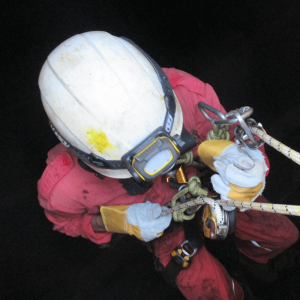
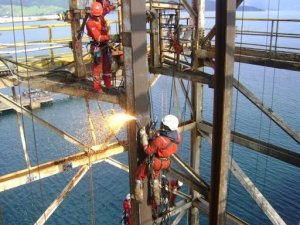
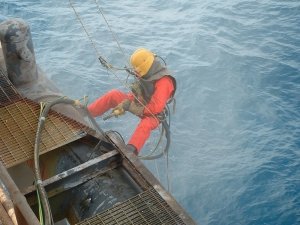
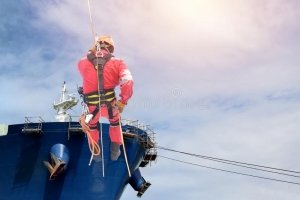
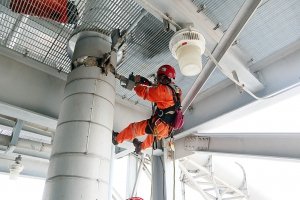
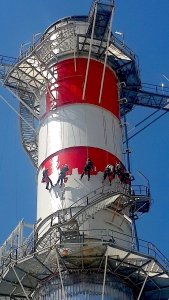
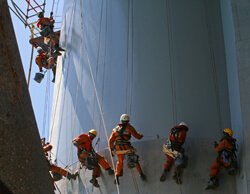
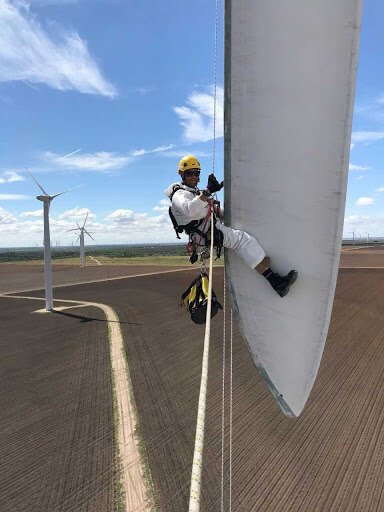
The rope access method is a very cost efficient way of accessing any type of high rise structure or any type of awkward space. Proper training and safety guidelines are essential to successfully carry out a Rope Access job.

Our professionals are qualified Rope Access Level I, II & III.

Our expert team of qualified Rope Access Technicians assists us in providing specialized services worldwide to the offshore oil & marine industries where limited access may present a serious problem.

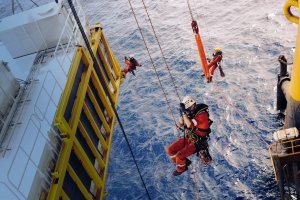
Using safe “abseiling” procedures, our Rope Access Service can carry out various skilled and semi-skilled operations during ballast voyages on Oil Tanker vessels, or on stationary Rigs, Platforms and FPSO installations.

This effectively offers the owner a safe cost-effective option as a convenient proven alternative to erecting staging or using cumbersome skyjacks etc.

Our rope access services include:

  • Ultrasonic Thickness Measurement
  • Hydro Jetting
  • Painting
  • NDE inspection (MT / PT / UT / ET / ACFM)

Industrial Services

Qualitech has been servicing GLOBALLY in mines, power utilities, mills, silos and plants for more than 7 years, offering innovative rope access solutions for clients requiring quick and safe turnaround times.

Our core services include:

  • UHP/Mechanical Preparation/Grip Blasting
  • HP washing
  • Cladding
  • Steel erections
  • Fabrication
  • Coating programmes
  • Electrical
  • Glazing
  • Welding
  • Rigging
  • Building maintenance
  • Paint Spraying

Cleaning

Contracts undertaken by Qualitech regularly include the cleaning of windows on high-rise buildings or glass atriums, inaccessible ceiling beams and high-rise tiled surfaces. In industrial settings, including offshore environments, high-pressure cleaning equipment is frequently used to degrease or prepare surfaces for coating applications, inspections, etc.

Installations & Repairs

Installation and maintenance of signs is a direct application of Industrial Rope Access. Our expert personnel can also weld, cut and perform mechanical and erection work, often eliminating complications arising from the use of scaffolding.

Building Maintenance

We can assist with:

  • Masonry repairs
  • Pointing
  • Injection pointing
  • Concrete repairs
  • Roofing repairs
  • Downpipes
  • Flagpoles
  • Bolt installation
  • Bird protection systems
  • Lightning conductors

Rope Access Special Services Painting Services

Inaccessible painting contracts whether small “touch-up” jobs or large projects, are ideally suited to Industrial Rope Access techniques. Qualitech is regularly contracted to perform large grit blasting, hydro blasting and painting work and is fully conversant with all modern coating systems.

Rope access painters are a highly competitive option for offshore fabric maintenance on FPSO’s, platforms and rigs as well as on tankers and VLCCS (for riding crews).

Special Projects

Qualitech is known for its innovative rigging solutions. From sign installations and derrick extensions to fabric-tensioned rooves and offshore installations, Qualitech can rig anywhere, anytime. Our heaviest lift to date exceeds 400 tons.

Geo Technical

  • Rock-barring
  • Anchoring Systems
  • Rock Netting
  • Slope and Cliff Stabilisation
  • Catch Fences
  • Rock Anchors

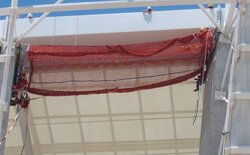
Netting

  • Fall protection netting
  • Access netting
  • Bird protection netting
  • Debris netting

Other unique contracts performed by Toprope include:

  • Rock-barring on Chapman’s Peak
  • Bird proofing of high-rise buildings
  • Installation and maintenance of microwave dishes
  • Geo-technical surveys
  • Inspections and erection of radio masts

EDDY CURRENT TESTING

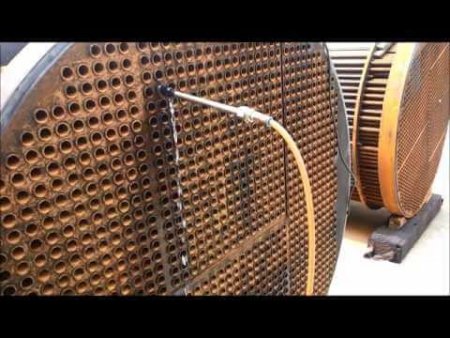
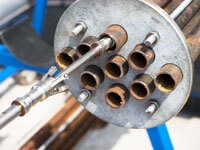
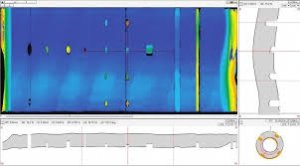
Eddy current testing is a noncontact method used to inspect nonferromagnetic tubing. This technique is suitable for detecting and sizing metal discontinuities such as corrosion, erosion, wear, pitting, baffle cuts, wall loss, and cracks in nonferrous materials.

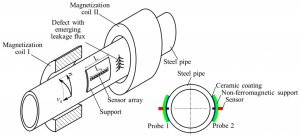
MAGNETIC FLUX LEAKAGE

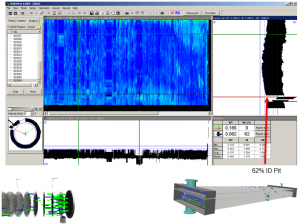
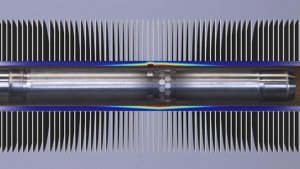
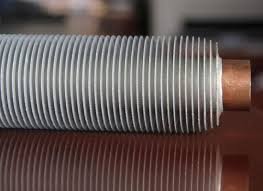
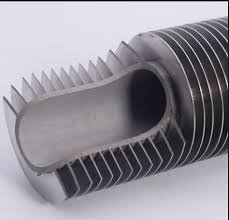
Magnetic flux leakage (MFL) is a fast inspection technique, suitable for measuring wall loss and detecting sharp defects such as pitting, grooving, and circumferential cracks. MFL is effective for aluminum-finned carbon steel tubes because the magnetic field is almost completely unaffected by the pressence of such fins.

INTERNAL ROTARY INSPECTION SYSTEM

The ultrasonic IRIS option is used to inspect a wide range of materials including ferrous, nonferrous, and nonmetallic tubing. This technique detects and sizes wall loss resulting from corrosion, erosion, wear, pitting, cracking, and baffle cuts.

NEAR FIELD TESTING

The near field testing (NFT) technology is a rapid and inexpensive solution intended specifically for fin-fan carbonsteel tubing inspection. NFT is specifically suited for the detection of internal corrosion, erosion, or pitting on the inside of carbon steel tubing.

The NFT probes measure lift-off or “fill factor” and convert it to amplitude-based signals (no phase analysis). Because the eddy current penetration is limited to the inner surface of the tube.

REMOTE FIELD TESTING

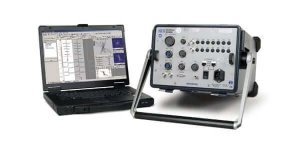
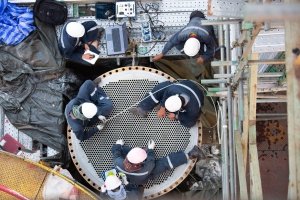
Remote field testing (RFT) is being used to successfully inspect ferromagnetic tubing such as carbon steel or ferritic stainless steel. This technology offers good sensitivity when detecting and measuring volumetric defects resulting from erosion, corrosion, wear, and baffle cuts. Olympus remote field probes and the MultiScan™ MS 5800 are used to successfully inspect heat exchangers, feedwater heaters, and boiler tubes, around the world.

MAGNETIC FLUX LEAKAGE

Magnetic flux leakage (MFL) is a fast inspection technique, suitable for measuring wall loss and detecting sharp defects such as pitting, grooving, and circumferential cracks. MFL is effective for aluminum-finned carbon steel tubes because the magnetic field is almost completely unaffected by the pressence of such fins.

CRAWLER UT GAUGING

Battery operated, encoded crawler with 5 MHz, dry coupled wheel probe. Supplied with a 50 metre umbilical cable for access to the top of the highest storage tanks methods. The Scorpion is a rugged remote access ultrasonic (UT) crawler designed for cost effective ultrasonic inspection on ferro-magnetic structures such as storage tanks, vessels and offshore installations without the need for costly scaffolding or rope access associated with UT thickness gauging.

High resolution B-scan image

Simple profile, or full amplitude display

Permanently stored data for recall to assist with RLA & RBI trend forecasting

No couplant or paint removal required

APPLICATIONS

  • Tank Thickness Gauging without Rope Access / Scaffolding
  • Pressure vessels and offshore installations Thickness Gauging

PERSONNEL QUALIFICATIONS

ISO 9712 ( PCN, RTC, CSWIP), ASNT Level 2/3

ACOUSTIC EMISSION

Acoustic Emission Testing (AET) is a Non-Destructive Testing (NDT) method that is used to analyse emitted sound waves caused by defects or discontinuities. These acoustic waves are induced by small deformations, corrosion or cracking, which occur prior to structure failure. It is therefore possible, with AET, to locate structural defects and to monitor the propagation and development of discontinuities.

APPLICATIONS

  • Storage tank Bottom floor inspection / Full Integrity Testing
  • No need to evacuate the load from the storage tank
  • Pressure vessels, Gas Bottles Integrity Testing without evacuating load

PERSONNEL QUALIFICATIONS

ISO 9712 ( PCN, RTC, CSWIP), ASNT Level 2/3

TRACK RECORDS:

  • Storage Tank Floor Bottom Inspection
  • FRP vessels

AMERICAN PETROLEUM INSTITUTE (API) SERVICES

The American Petroleum Institute (API) is a well recognized organization for laying the codes in the refinery & processing industry. We can perform jobs as per the API codes in:

  • Pressure vessel inspection
  • Pipeline inspection
  • Above ground storage tank inspection
  • Risk based inspection
  • Refractory inspection
  • Fitness for service
  • Damage mechanism identification
  • Risk based inspection & fitness for service pays of very well from a safety & financial point of view

We have well trained engineers who are qualified, experienced and certified by the American Petroleum Institute in different disciplines including:

  • API 510
  • API 570
  • API 653
  • API579
  • API 571
  • API 580
  • API 936 to tackle any challenging jobs as per API codes .

Electro-Magnetic Acoustic Transmission (EMAT)

Using EMAT technique with panametric probes, Qualitech can measure the high-temperature (up to 325° C) surface thickness. Above this temperature, the thickness readings become unstable, unreliable and non-repeatable.

The surface for thickness measurement needs to be fairly smooth, free from rust, scale or any other kind of deposits. To get a clean surface for thickness survey, a metallic file, wire brush, small chisel and emery paper can be used for cleaning. Hammering is strictly not advisable for removal of scale/deposits. In case the above method does not yield the desired cleaning, then mechanical cleaning by power brush should be used. Under exceptional circumstances, grinding is used as a method for cleaning, with prior permission from the inspection engineer.

Thickness can be measured on painted surfaces, provided the surface paint is visible without any blisters. For critical measurement where the corrosion rate calculations are important from the remaining life point of view, paint removal is done before doing thickness survey.

Piping

For all on-site piping, corrosion loops are the basis for carrying out thickness survey whereas, for offsite and tank farm piping, special loops are made for thickness monitoring:

Each corrosion loop (for on-site piping) have a combined isometric where Thickness Management Locations (TML) are serially marked

If any base readings are taken before commissioning, it is done with random values measured on the components

Routine, on stream or shutdown thickness measurement at these locations, is done in the form of a scanning. The scanning format is in a grid of size 1.5” x 1.5”, with each component marked with chalk before thickness scanning

Out of all the locations, few TMLs are identified for regular scanning. The selected TMLs are identified by the inspection engineer, based on the probability of corrosion at these locations (as compared to other locations in the loop) and accessibility considerations.

Respective maintenance departments provide access to ladders, scaffolding or portable trolleys for thickness scanning. In case corrosion is observed in these TMLs, then other TMLs in the loop are included for thickness scanning

Hot Tap Locations

In case of thickness survey of equipment and piping for hot tap locations, following steps are undertaken:

The maintenance team marks the location of the new nozzle as per the exact type and dimensions of the component to be welded on the parent pipe

The Inspection engineer verifies the type of component to be welded viz. weldolet, pipe of pipe connection, a nozzle with reinforcement pad, split sleeve nozzle etc. The Inspection engineer marks the centerline of the proposed weld joint: A width of 1.5” to 2” shall be marked on either side of the proposed weld centerline. A close thickness survey is undertaken along the centerline and on either side and the minimum thickness measured is reported in the hot tap file.

If the thickness measurement is comparable to nominal or previously measured values (if available at the same locations or at different locations in the same pipe), then it could be assumed that there is no corrosion at the location.

If the thickness measurement indicates severe corrosion, and thickness measured is very close to the minimum allowable for hot tapping, then hot tapping should be avoided at the location, as it will be difficult to pick up a thickness point with minimum thickness through this procedure.

Minimum thickness required for hot tapping is 4.8mm. If the pipe is corroded and actual thickness is in the range of 6 – 8mm, then alternate methods should be used to check the pipe thickness and certify the same fit for the hot tap.

Minimum thickness required for hot tapping is 4.8mm. If the pipe is corroded and actual thickness is in the range of 6 – 8mm, then alternate methods should be used to check the pipe thickness and certify the same fit for the hot tap.

Thickness Locations In Tanks

In case of storage tanks, the thickness is measured from outside first, followed by shell course from the bottom

In all the other shell courses, the thickness is measured along the staircases. Few thickness points are taken near the weld and few at the center of the shell course plate

In case of roof plates, the thickness is measured on each plate, with two thickness points at the center of each plate and one thickness point at the corner of each plate

In case of bottom plates, thickness measurement is possible only during an internal inspection. Under this, the thickness is measured on each plate, with two thickness points at the center of each plate and one thickness point at the corner of each plate

Internal Oxide Scale Boiler Measurement

The high-temperature operation of steam boilers (in excess of 10000F or 5000C) can cause the formation of a brittle iron oxide called magnetite on the inside surfaces of tubing. It reduces heat transfer and increases operating tube wall temperature. This shortens the creep life of the tube. If detected in time, it can help for de-scaling decisions to increase the life and efficiently. It is possible to judge the remaining life of the boiler tube by measuring internal oxide scale.

Automated Reformer Tube Inspection System (ARTIS)

Qualitech has indigenously developed an automated robotic crawler to aid ultrasonic inspection of reformer tubes. It provides a tabular and interactive digital output. The 1st point on every tube is referred at the bottom of the tube, climbing up to 14 meters height and provides tube data at every 0.1-meter distance. The ARTiS can simultaneously collect tube data such as ultrasonic dB level of attenuation, the diameter of the tube and bowing angle at every location. An interactive, graphical user interface is part of the digital report along with a conventional hardcopy printed in a tabular format.

Few of the key advantages of using ARTIS:

  • The method follows a similar technique of manual ultrasound coupling making it an industry-wide proven technique of inspection
  • A macro-level view of the overall tube condition in the reformer is also reported, emphasizing troublesome areas/corner of the furnace if any
  • The outcome of inspection work becomes more systematic and traceable with point-wise reading on each tube for ultrasound attenuation and creep strain
  • It avoids the need for scaffolding, saves total tube inspection time and helps to achieve reduction in shutdown time of the plant
  • Automation deploys limited water source for coupling and nearly eliminates the need for overhead water drum arrangement, which overcomes additional issues related to drum filling, vacuum water clogging, etc.

Replica Metallography

Replica Metallography is a non-destructive technique for observing and documenting the microstructural integrity of engineering metal parts, castings, forgings, welds and brazed joints, equipment, components and steel parts. It can identify materials and their microstructures.

VISIONARY INSPECTION offers you a metallographic examination and replica testing services. Our experts provide you onsite non- destructive microstructure analysis and replica testing, directly evaluating the damage or remaining lifetime service. VISIONARY INSPECTION offer a wide portfolio of Replica Metallography services from accredited laboratories and which enable us to choose your needs and requirements.

Advantages Of Replica Metallography

  • It is very powerful technique for addressing many metallurgical problems.
  • Many applications to utilize this technique.
  • It can use quality control and investigational purposes.
  • Save cost and time.
  • It analyze the damage.
  • Optimize material selection.

Subsea Engineering & Repairs

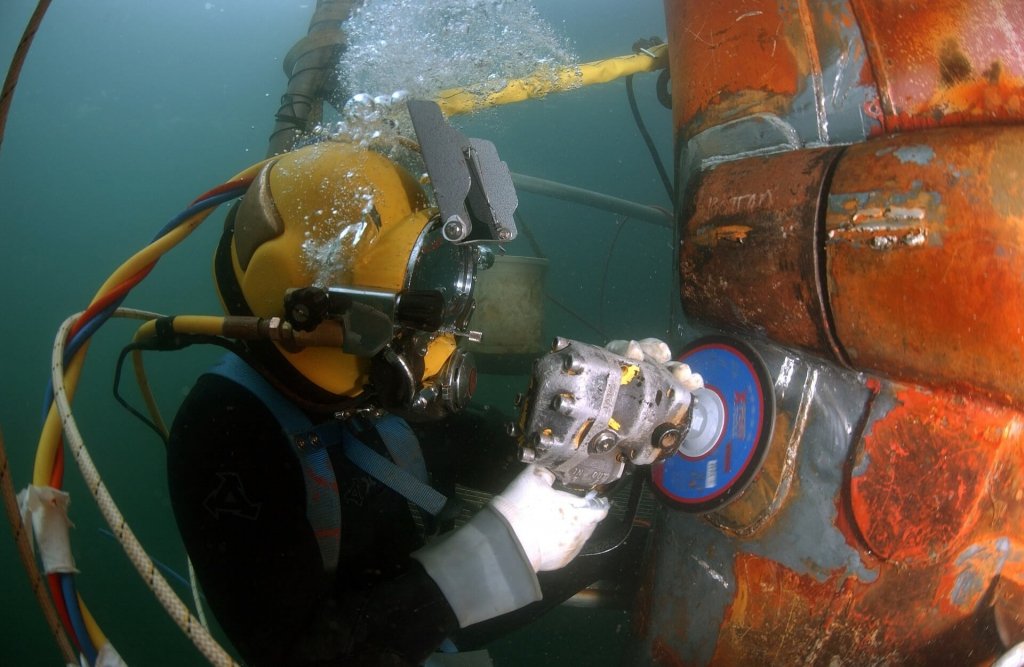
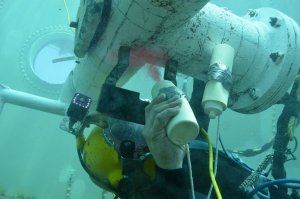
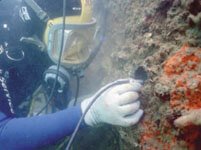
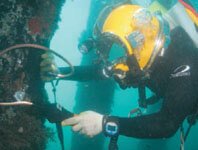
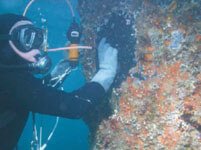
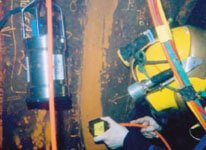
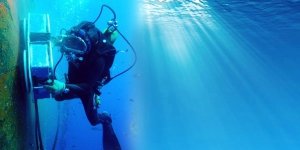
Our diving services include underwater inspection, underwater cleaning, CCTV underwater video survey, mooring system installation, underwater video and still photography, search and recovery, hull cleaning, aquaculture diving, media diving, pool cleaning and repair, underwater mapping and light civil engineering.

Underwater inspections are primarily visual observations of the facility being inspected. Quantitative measurements, such as underwater voltmeter readings on metal structures and thickness measurements on mooring chain and steel piling, are often taken. Before making the observation, it is usually necessary to clean the structure of marine growth and fouling. Several techniques are used to accomplish this cleaning, ranging from hand cleaning with scrapers and wire brushes to the use of water blasting jets and hydraulically powered mechanical abrasive tools.

It can be performed by following methods:

  • Visual Inspection
  • ACFM Inspection
  • Remote Visual Inspection

Subsea Engineering & Repairs

SeaTec has built a worldwide network of services specialising in affordable, flexible solutions for underwater repair and maintenance. We service all types and classes of commercial, naval and offshore vessels, fixed and floating platforms and offshore installations.

These innovative products and services reduce the need to dry dock and off-hire, resulting in savings of time and cost. The support supplied by SeaTec is tailored to each customer and may involve any combination of design, consultancy, project management, operational maintenance, technology transfer, training and the provision of specialist tooling and equipment.

SeaTec uses the latest CAD software, 3D modelling and finite element analysis programmes to design and analyse a vast range of equipment and systems to support subsea projects. Typical in–water services provided by SeaTec include:

  • Solutions to collision and grounding
  • Afloat equipment installs/modifications repairs e.g. solutions for scrubber/BWT installations, ICCP installs, stabilisers, rudders
  • Hull modification – insert plates, bilge keel modifications
  • Propeller / thruster – repairs, installs, modifications including propeller boss cap fins (PBCF) and other similar variants.
  • Signature noise reduction cladding
  • Decommissioning and salvage

Contact us to discuss how our subsea engineering expertise can help you.

Specialist Services

SeaTec provides a range of specialist subsea services. These include:

  • Inwater Hull Damage Repairs
  • Insert Plate Repairs
  • Paint and Adhesives Application Underwater
  • Stern Seal Servicing
  • Thruster Repair and Replacement
  • Voith Schneider Propeller Repair and Replacement
  • Welding

Pre-Heat Services

The heat applied to the base metal or substrate to attain and maintain preheat temperature is called pre heating.

The right preheat and interpass temperature is important in order to avoid hydrogen cracking.

Preheating may be performed by the use of gas burners, oxy-gas flames, electric blankets, induction heating, or by heating in a furnace. For good results, it is essential for the heating to be uniform around the joint area.

When preheating is specified, the entire weld joint should be heated evenly through the material thickness to the desired minimum temperature.

To obtain a uniform temperature through the material thickness, it is desirable to apply the heating sources to one side of the material surface and to measure the material temperature on the opposite side.

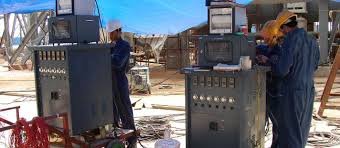
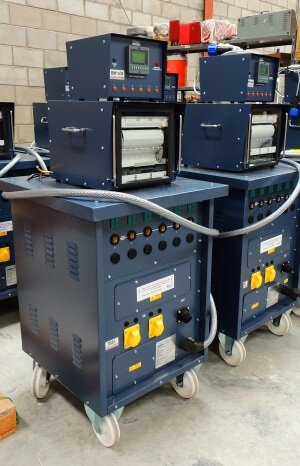
HEAT TREATMENT (Localized)

Post Weld Heat Treatment (PWHT) is a term that refers to any heat treatment that is applied to a material after welding. The process is often used to improve the properties of the weldment. In most cases, the goal of PWHT is to increase the resistance of the material to brittle fracture by relaxing residual stresses which can occur in weldment due to restraint by the parent metal during weld solidification.

APPLICATIONS

  • Weld inspection – Structural / Piping
  • Casting / Forgings / Valves

TRACK RECORDS / SPECIALTIES

  • Pre-Heating / Post Weld Heat Treatment/Normalizing
  • 250M Length FPSO Stones Turret done in Single Firing
  • 50KVA Equipment / 270 KVA Imported Heavy Equipment
  • Resistance Method / Induction Method

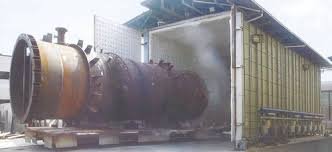
FURNACE HEAT TREATMENT

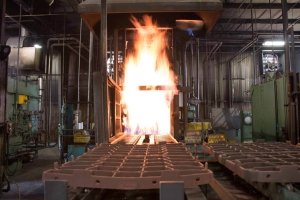
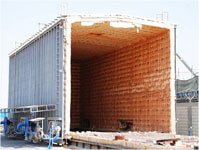
We have dismantling type Furnace which is fabricated by many panels of structures, it can be re designed and re-sized.

APPLICATIONS

  • Heavy Structures such as turret / turret assemblies can be done in single firing
  • Many Pipe Spools can be done in short time

TRACK RECORDS

  • Tullow Ten Sofec Turret
  • Scarv Turret
  • BP QUAD 204

Normalizing

Hardness Testing

Hardness is a characteristic of a material, not a fundamental physical property. It is defined as the resistance to indentation, and it is determined by measuring the permanent depth of the indentation. More simply put, when using a fixed force (load)* and a given indenter, the smaller the indentation, the harder the material.

APPLICATIONS

  • Verification of Hardness after PWHT
  • Material Hardness verification after machining

Introduction to AEROSPACE non-destructive testing

Non-destructive testing (NDT) plays a vital role in the design, manufacture and maintenance of aircraft. It is used throughout a product’s lifecycle – from the qualification of new materials and the designing of new aircraft to in-service inspections of aircraft structures and engines.

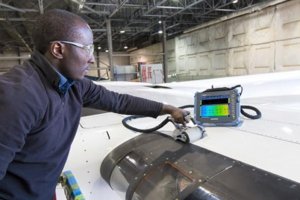
Non-destructive testing (NDT) is a way to detect and evaluate flaws in materials. Within aerospace NDT plays a vital role in the design, manufacture and maintenance of aircraft.

The simplest and most accurate way of testing materials and components is often to test them to destruction. Destructive testing is used in aerospace to determine the physical properties of materials, components and assemblies. It can reveal useful information about characteristics of materials including ductility, tensile strength and fracture toughness.

However, destructive testing is not always possible or desirable when testing parts and materials destined for, or already in use on, aircraft mainly because of their high value.

Instead engineers and technicians use non-destructive testing techniques, equipment and analysis to examine materials and components before they enter service and while they are in service, without destroying them. NDT can also detect flaws and differences in materials that would otherwise be very difficult to detect using destructive methods.

When is NDT used in aerospace?

Safety is the single most critical aspect of aviation. NDT is used throughout a product’s lifecycle – from the qualification of new materials and the designing of new aircraft to in-service inspections of aircraft structures and engines.

During development, researchers may use NDT to help develop lightweight and more flexible materials and structures for aircraft. Engineers will use NDT tools and processes during aircraft testing and certification to test performance and durability and investigate issues.

Aircraft makers use NDT to ensure the quality of materials and joining process during and after manufacturing. Finally, maintenance engineers and technicians will use NDT to inspect in-service aircraft for damage and cracks at regular intervals to guarantee airworthiness and safety.

How is NDT used in aerospace?

The vital aspect of NDT is that the part or the material being tested remains whole and serviceable after the testing.

NDT can generally be split into two areas: surface techniques and sub-surface techniques. Within these two areas is a range of established and trusted tools, such as tap tests conducted with hammers to more recent and advanced technologies, such as 3D computed tomography.

Visual inspections are the oldest and simplest method of non-destructive testing. It’s often said the human eye is the most powerful NDT tool. Visual inspections of aircraft structures and components for damage such as cracks, corrosion and misalignment will often be the first sign of a problem.

Various equipment is used for visual inspections, from magnifying glasses and mirrors to video borescopes for viewing hard to reach places, charge-coupled devices and remote viewing systems.

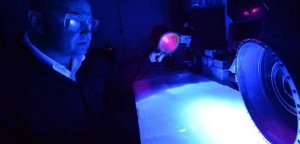
Liquid penetrant testing is another simple and quick method widely used in aviation to detect surface defects and structural damage in non-porous materials.

Test objects are coated with a highly viscous dye. Once the dye has settled into any cracks or flaws, the object is cleaned, leaving just the dye which has penetrated the cracks. Some of this remaining dye will flow back out, revealing an indication of the cracks and flaws.

Fluorescent penetrants are often used for sensitive materials and parts. Liquid penetrant testing is a flexible technique and can be carried out in-situ or in a workshop or hangar. It is also often part of cleaning and servicing parts, where the surfaces of objects are inspected after cleaning.

Acoustic emission testing is the application of an abrupt force to the test object, a ‘tap test’ and the analysis of the results. This analysis could be as simple as listening to the sound or using multiple sensors to record the resulting stress waves and small deformations that occur.

Leak testing uses four main techniques: bubble, pressure change, halogen diode and mass spectrometer testing, and involves pressurizing and immersing the test object in liquid to trace and record leaks. Aircraft and engines use large amounts of liquids and gas – leak testing is therefore an important part of manufacturing and maintenance.

Radiography in aerospace can use both x-rays for thin materials and gamma rays for thicker materials. Traditionally film has been used to capture the image, but is being superseded by digital methods.

A further recent advance is 3D computed tomography (CT) scanning, which captures multiple x-rays of a test object to build up a cross-section view of the object on a computer.

Ultrasonic testing is the most common sub-surface technique and uses high-frequency sound waves to locate defects within a component or material. It is commonly used to detect defects in welds, fittings, joints, bolts and adhesive bond quality. The technique is similar to sonar, in that it records and analyzes the reflection of sound waves.

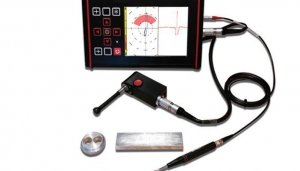
There are several different ultrasonic testing techniques used by aerospace engineers and technicians, including straight beam inspection, immersion testing and phased array inspections. All use an ultrasonic transducer, also called a probe, to send and receive soundwaves and display results as a graph on a screen.

Magnetic particle testing involves inducing a magnetic field in the test object, applying magnetic particles to it either in dry form or suspended in a liquid, which could be colored or fluorescent, and then examining the object using suitable lighting.

The magnetic particle testing technique is used to detect discontinuities in ferromagnetic materials. Several different pieces of equipment can be used for magnetic particle testing depending on the environment, including yokes, prods, coils and heads.

Eddy-current testing is a sub-surface technique that induces an electromagnetic field in a conductive test object and measures the secondary magnetic field generated around the electric current to determine the presence of flaws.

Vibration analysis monitors the vibration signatures generated by a rotating piece of machinery and interprets them to detect when something out of the ordinary occurs. Displacement sensors, which use eddy currents, velocity sensors or accelerometers attached to the machinery, can be used for the monitoring.

Thermal/Infrared testing involves mapping the surface temperatures of an object and can be used to detect damage such as corrosion, delamination, voids and disbonds. It works by detecting anomalies in the heat flow in a material or component.

Laser testing includes techniques such as shearography, holography and profilometry. All use laser light in different ways to detect deformation on the surface of objects and computer processing to compare stressed and unstressed conditions. It is most useful when detecting tiny flaws a few micrometers in size.

AEROSPACE Services

  • We provide NDT inspection services mainly to the Aerospace Sector, but can provide the same quality inspections and service to the Industrial Sector.
  • Our highly skilled and approved NDT Technicians provide a 24/7 365 days a years cover including AOG, in the ASIA or globally.
  • Inspection of commercial aircraft, fixed wing and rotary, also vintage and historical restoration.
  • Through our associate companies we are able to offer or arrange almost any type of testing.
  • Level 3 services, and NDT Training
  • Technique writing
  • Manufacture NDT Reference pieces
  • Advanced NDT Techniques such as Phased Array Ultrasonic and Eddy Current Array
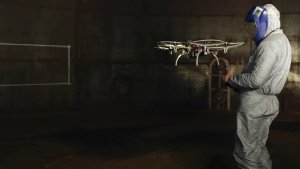
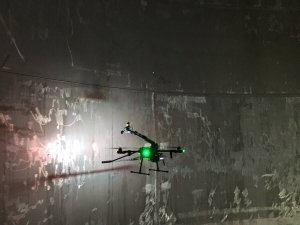
  • Visual inspection by use of Drones

Fire Protection System Inspection, Testing & Maintenance

  • Water spray system
  • Deluge system
  • Fire water main, hydrant outlets & isolation valves
  • Fire fighting fixed monitors
  • Tank fittings
  • Fire extinguishers
  • Fire Hoses
  • Foam Carts

Oil and Gas Industrial Fire Protection System Services

Critical equipment deficiencies due to lack of proper maintenance can cause downtime, loss or revenue, high repair cost and unsafe working conditions. Our experienced technicians will provide necessary advise and measures to our clients with regards to proper codes and standards.

  • Inspection, Testing & Maintenance
  • Fire water line, hydrants, block valves.
  • Fire Extinguishers (Big unit & Portable type)
  • Foam Carts
  • Foam Pourers, Foam Bladder Tanks & Chambers
  • Water / Foam Deluge Systems
  • Other Fire Protection Services
  • Water Spray Systems
  • Foam testing and supply
  • Fire hoses
  • Tank fittings
  • All other related fire protection services

SCBA & BA Compressor

  • Servicing & maintenance of BA compressor
  • SCBA cylinders air quality test
  • SCBA hydrostatic test

Fire Extinguishers Inspection & Maintenance

We provide fire extinguisher inspection and maintenance services for buildings and industrial premises. Our IFE trained service technician will strictly adhere to standards and code of practice

  • Monthly Inspection
  • Yearly Maintenance & Inspection
  • Hydrostatic Test
  • Fire Extinguisher Training

Rescue Standbys and Adhoc Rescue Callouts

Our certified rescuers are readily available for any rescue standbys during Turnaround and adhoc emergency callouts. Be it working at height or confined space rescue, our certified rescuers complete with complete rescue PPE and equipment will respond to emergency onsite. Our rescue team have vast experience in Oil and Gas Industrial settings and safety is our upmost priority.

Past clients

  • Brunei LNG
  • Valspar Pte Ltd
  • UTAC Pte Ltd
  • Oman LNG

Lifeline Installation

We provide lifeline installation services for various industrial applications. Our team is experienced in installing and maintaining lifeline systems to ensure safety and compliance with industry standards.

THIRD PARTY INSPECTION & SPECIALIZED MANPOWER SERVICES

We provide professional manpower to our clients through our worldwide manpower resource base. All personnel in our custom designed database are pre-screened, thus providing our clients with reliable personnel who will perform satisfactorily.

Our database includes the following categories:

Quality Assurance personnel

Quality Control personnel

NDT Level 3 services

PCN / ASNT Level 2 services

NDT Consultancy services

Inspection personnel

  • Welding Inspectors
  • Coating Inspectors
  • Mechanical Inspectors
  • Piping Inspectors
  • Structural Inspectors
  • Electrical Inspectors
  • Third Party Inspectors
  • Expeditors
  • Project Engineers
  • Project Managers

Mechanical Commissioning

  • Mechanical Manager / Lead
  • Mechanical Engineer
  • Mechanical Supervisor
  • Mechanical Tech / Senior Technician
  • Mechanical Assistants
  • MC Coordinator / Expeditor

Electrical & Instrumentation Commissioning

  • E & I Lead
  • E & I Engineer
  • E & I Supervisor
  • E & I Tech / Senior Technician
  • E & I Assistants
  • Compex Inspector
  • ATEX Inspector

Telecom Commissioning

  • Telecom Lead
  • Telecom Engineer
  • Telecom Supervisor
  • Telecom / Senior Technician
  • Telecom Assistants

Other Technicians / Coordinator

  • Electricians for Termination
  • Pipe Fitter
  • Welders
  • Structural Fitters
  • Riggers & Scaffolder
  • CAD designer
  • Permit to work coordinator
  • Control Room Technicians (Boardman)

Other Support Services

A Star Technical services pte ltd also provides test and measurement equipment for carrying commissioning work. Our equipment are calibrated and certified according to national / international requirements / standards

Instrument Calibration and Measurement Equipment

  • Pressure Calibrator
  • Temperature Calibrator
  • mA Loop Power Calibrator
  • Multi-Function Signal Calibrator
  • HART & Foundation Fieldbus Communicator
  • Decade Box

Electrical Test Equipments

  • Primary current Injection Test Set
  • Secondary Current Injection Test Set
  • 3 Phase Current Injection Test Set
  • Transformer Ratio and Polarity Tester
  • Micro-Ohm Meter
  • Analog / Digital Clamp Meter
  • Phase Rotation Indicator
  • Lux Tester
  • 3 Phase power Logger
  • RCD Tester

Enviromental & Machine Monitoring Equipments

  • Vibration Meter
  • Temperature & Humidity Meter
  • Airflow Meter / Micromanometer
  • Infrared Thermometer
  • Tachometer

Telecom & Network Test Equipments

  • Cable IQ Qualification Tester
  • Micro scanner Cable Verifier
  • Audio Impedance Tester
  • Sound Level Tester

Third Party Inspection / Manpower supply services

  • QA / QC Inspectors
  • Welding Inspectors (AWS/CSWIP/PCN)
  • Piping Inspector
  • Piping Engineer
  • Mechanical Inspector
  • Mechanical Engineer
  • Equipment Inspector
  • Fabrication Expeditors
  • E & I Inspector / Engineer
  • API 510, 570, 653 Inspectors
  • Painting / Coating Inspectors (NACE/BGAS)

NDT Level III

1.Selection of right nondestructive testing method/s and techniques suitable for the application

2.Selection of suitable equipment for specific purpose

3.Preparation of NDT inspection procedures for various inspection methods, clients and jobs

4.Preparation and review of procedures based on International, National or in-house Codes, Standards and specifications to meet customer requirements

5.Preparation of written practices as per ASNT recommended practice SNT-TC-1A

6.Review of all inspection procedures

7.Training and certification of personnel as per employer’s written practice

8.Selecting appropriate candidates for recruitment as Trainees, NDT Level I & II to fill job vacancies in NDT, material testing, welding inspection and other quality control related posts

NDT Training

Ultrasonic Inspection

Ultrasonic Thickness Gauging

Advance UT

Industrial Radiography

Radiation Safety

Eddy Current

Magnetic Particles

Penetrant Testing

Visual inspection

Advanced NDT Training

PAUT

TOFD

AUT

DRT

CRT

ECT

IRIS

MFL

RFT

IR

Welding Inspector Training

  • International Preparatory Courses
  • AWS-CSWIP Bridging
  • AWS-CWI Preparatory
  • BGAS – CSWIP GRADE II
  • CSWIP 3.1 Preparatory
  • CSWIP 3.2.1 ,3.2.2Preparatory
  • CSWIP 3.2.1 PREPARATORY, CSWIP 3.2.2 PREPARATORY

    CSWIP 3.2 is a senior welding inspector certification course. CSWIP Certification schemes are UKAS/Accredited to ISO/IEC 17024, the international standard for personal certification. The certification scheme for personnel (CSWIP) is a comprehensive scheme which provides for the examination and certification of individuals seeking to demonstrate knowledge and competence in their field of operation. The scope of CSWIP includes, among others, welding inspectors, welding supervisors, welding instructors, plant inspectors, under water inspectors, welders and NDT personals.

    CSWIP is managed by the certification management board which acts as the governing board for certification in keeping with the requirements of the industries served by the scheme. The certification management board is UK based. All CSWIP boards and committees comprise member representatives of relevant industrial and other interest.

    Whom Should Attend the Course?

    This course is suitable for experienced welding inspectors and quality control staffs

    Certified welding inspector for a minimum 2 years’ experience

    5 years authenticated experience related to the welding inspection duties

    Above candidates must have a valid CSWIP Level 2(3.1) certification

    Subjects

    • Duties of the senior welding inspector
    • Terms and definitions
    • Planning
    • Codes and standards
    • Calibration Of Welding Equipment
    • Destructive testing
    • Heat treatment
    • Wps And Welder Qualifications
    • Material Inspection
    • Residual Stress And Distortion
    • Weldability Of Steels
    • Weld fractures

    Our Specialities

    PRACTICALS+QUESTION/ANSWERS

    MACRO PRACTICALS

    SPECIAL NOTES ON POSSIBLE OUT SIDE QUESTIONS AND SEVERAL MOCK TESTS

    WE ARE COMMITED TO GIVE YOU HIGH QUALITY SENIOR INSPECTOR COURSE

    The Examination Format

    Candidates who do not already hold a welding inspection certificate must also complete the full welding inspector (level2) examination in addition to the procedures out lined below

    THEORY PART C3(1)

    Specific welding technology (including audit question:4 questions from 6 time:1 hour 15 minutes.

    THEORY PART C3 PART(2)

    General welding theory, product technology and ndt,30 multiple choice questions, time allowed 45 minutes.

    PRACTICAL PART A3(1)

    Scrutinize and comment on three inspection related documents; time allowed 1 hour.

    PRACTICAL PART B3

    Examination of weld failures. Time allowed 1 hour.

    PRACTICAL PART C3

    Scrutiny and interpretation of a fabrication drawing. Time allowed 1 hour.

    PASS MARK FOR ALL IS 70%

    RADIOGRAPHIC INTERPRETATION-SUPPLEMENTARY.

    EXAMINATION FORMAT: THEORY PART D3

    Standard radiographic interpretation theory, nature and properties of x and gamma rays, photographic aspects, fundamental aspects of radiographic quality, geometry of image formation, interpretation, 20 multi choice question time 30 minutes.

    PRACTICAL PART D3

    Radiographic interpretation in a number of radiographs.

    Employment Opportunities

    Graduates may find employment as a certified QA/QC Certified senior Welding Inspector, Senior Welding Instructor and Senior Welding Engineer.

    Painting Inspector Training

    BGAS – CSWIP GRADE II,BGAS – CSWIP GRADE I

    BGAS is an International Certification scheme for painting inspectors. In this course contents corrosion, specified coating conditions, surface preparation methods and standards. This BGAS certification approval is very useful to inspectors as it can extend their working capability on pipeline projects. This certification can lead you to a career that is engaging and promising on all levels.

    Whom Should Attend the Course?

    Candidates with or without experience in the painting inspection industry

    Suitable for individuals engaged in the inspection and coating of new and existing pipe lines

    Subjects

    • Corrosion
    • Surface Preparation Methods And Standards
    • Surface Contaminants And Tests For Detection
    • Paint Constituents And Basic Technology
    • Solutions And Dispersions
    • Drying And Curing Of Paint Films
    • Paint Systems
    • Water Borne Coatings
    • Paint Manufacture
    • Testing Of Paints For Properties And Performance
    • Film Thickness
    • Special Coating Conditions
    • Cathodic Protection
    • Holiday/ Pin Hole Detection
    • Paint Application
    • Metal Coatings
    • Coating Faults And Colour
    • Health And Safety
    • Duties Of Painting Inspector
    • Specifications For Paint Systems And Performance Requirements

    Our Specialities

    CLASS TEST ON EVERY TOPIC

    QUESTION BANK OF AROUND THOUSANDS OF QUESTIONS

    PRACTICALS+QUESTION/ANSWERS

    SPECIAL NOTES ON POSSIBLE OUT SIDE QUESTIONS AND SEVERAL MOCK TESTS

    Employment Opportunities

    Graduates may find employment as a certified QA/QC Certified painting Inspector, coating Instructor. Its depends upon qualifications and experience.

    QA/QC MECHANICAL ENGINEERING

    VISIONARY INSPECTION Institute is one of the best training institute Kerala ,offering courses in QA/QC. The courses are designed keeping in mind the current requirements. This training course provides in-depth knowledge required for welding and piping inspection professionals including Technicians, Inspectors and Engineers called upon to witness, supervise or conduct visual welding Inspection and Piping Inspection activities. The Practical aspects are emphasized by ensuring the theoretical training is complimented with practical sessions concerning the details of Welding Inspection and Piping Inspections under he guidance of a qualified instructor.

    Role played by a QA/QC Engineer

    A QA/QC Engineer plays a major role in almost all industry. Their work involves monitoring of products,testing them and ensuring that it meets the specified standards. They have to check the durability of the products and in case of any concern try and find a solution to it. They have to make sure that the production takes place in the proper manner and the quality of the product is maintained. There are a wide variety of opportunities for QA/AC mechanical engineers .There are various techniques that are used to ensure the quality of the products. These techniques help them detect the irregularities at the initial stage thus helping them to find a solution for the same.

    This covers the following areas of specialization:

    • QA/QC Welding Inspection
    • Topics: QC Welding section, NDT , Basic Piping Engineering, Welding Engineering
    • Topics:QC Piping section, NDT , Piping Engineering and Basic Welding Engineering.
    • Diploma in QA/QC Engineering
    • Topics: NDT methods,Piping inspection,welding inspection,Basic fire and safety.

    Safety Training

    • Working at height for supervisors
    • Working at height for workers
    • Peer rescue assist (Pre-rigged Systems)
    • Rope Rescue Awareness (Level 1)
    • Confined space rescue awareness (Level 1)
    • Integrated rope and confined space rescue
    • Interior and exterior firefighting
    • Hazmat awareness

    Lead Auditor Training

    • QMS ISO 9001:2015 Lead Auditor
    • ISMS ISO 27001:2013 Lead Auditor
    • FSMS ISO 22000:2018 Lead Auditor
    • EMS ISO 14001:2015 Lead Auditor
    • BCMS ISO 22301:2012 Lead Auditor
    • ISO 45001:2018 MIGRATION Lead Auditor

    Internal Auditor Training

    • QMS ISO 9001:2015
    • ISMS ISO 27001:2013
    • FSMS ISO 22000:2018
    • EMS ISO 14001:2015
    • ISO 45001:2018 MIGRATION

    Electrical & Electronics Instruments

    • AC voltage reference meter
    • AC-DC current transfer device
    • AC-DC voltage transfer device
    • Capacitance meter
    • Clamp meter
    • Oscilloscope
    • Function generator
    • Frequency calibrator
    • Tachometer-non conduct
    • Earth/ Continuity tester
    • High voltage meter
    • Insulation tester
    • Megger tester
    • Multifunction calibrator
    • Multimeter
    • Potentiometer
    • Power analyzer
    • Power calibrator
    • Power meter
    • Resistance Bridge
    • Resistance standard
    • Wattmeter
    • Sound calibrator
    • Loop calibrator
    • mA calibrator
    • Process meter
    • Low current meter
    • Low current source
    • Low magnetic field coil
    • AC/DC welding machine
    • Spot welding machine
    • Nickel coating plate

    Mechanical Instruments

    Pressure Instruments
    • Pressure indicator
    • Pressure transducer
    • Dead weight pressure tester
    • Vacuum gauge
    • Vacuum transducer
    • Pressure gauge
    • Pressure switch
    • Pressure transmitter
    • Pressure relief valve
    • Manometer
    • Pen recorder
    • Barometer
    • Caisson gauge
    • Depth gauge
    • Pressure calibrator
    • Hook gauges
    • Differential pressure gauge
    • Differential pressure transmitter
    • Anemometer (air velocity meter)
    • Bolometer
    • Leak rate meter
    Torque Instruments
    • Torque driver
    • Torque gauge
    • Torque tester
    • Torque wrench
    Gas Instruments
    • Personal gas monitor
    • Portable multi gas monitor
    • HC & O₂ Detector
    • Multi gas detector
    • Carbon dioxide gas detector

    Length & Angle Measurements

    Length Measurements
    • Bore gauge
    • Plug gauge
    • Plastic thickness
    • Pin gauge
    • Optical parallel
    • Optical flat
    • Micrometre
    • Linear transducer & stage
    • Indicator inspector
    • Height setting micrometre
    • Profile projector
    • Screw pitch gauge
    • Stage micrometre
    • Steel rule
    • Test sieve
    • Thickness gauge
    • Thread gauge
    • Thread measuring cylinder
    • Toolmaker microscope
    • Vernier/dial/digital caliper
    Length Measurements
    • Height gauge
    • Glass scale
    • Gauge block
    • Fineness of grind gauge
    • Feeler gauge
    • Dial test indicator
    • Dial gauge calibrator
    • Dial gauge
    • Depth gauge
    • Calliper checker
    Angle Measurements
    • Angle gauge
    • Autocollimator
    • Bevel protractor
    • Clinometer
    • Indexing table
    • Polygon
    • Rotary table
    • Sine bar/spirit level

    Temperature & Humidity Instruments

    Temperature
    • Radiation Thermometer
    • Temperature Blackbody Furnace
    • Thermocouple (Source and Measure)
    • RTD (Source and Measure)
    • Thermocouple Calibration
    • Thermistor probe
    • Industrial Platinum Resistance Thermometer
    • Liquid in Glass Thermometer
    • Multi-Function calibrator (temperature)
    Temperature
    • Temperature indicator
    • Temperature Heat Plate
    • Temperature Water Bath and Oil Bath
    • Temperature Enclosure
    • Temperature Chart Recorder
    • Temperature Gauge
    • Temperature Switch
    • Temperature data logger
    • Surface probes
    Humidity
    • Thermo Hygrometer
    • Hygrometer
    • Psychrometer
    • Dew point meter
    • Thermo Hygrograph
    • Humidity and Temperature Transmitter
    • Data Logger

    Other Calibration Instruments

    Force
    • Durometer
    • Dynamometer
    • Force gauge
    • Force transducers
    • Gram gauge
    • Hydraulic jack
    • Load cell
    • Load column
    • Proving ring
    • Push pull gauge
    • Spring tester
    • Tension gauge
    • Compression testing machines
    • Concrete Compression testing machines
    • Tensile testing machines
    • Universal testing machines
    Mass
    • Balances (Electronic)
    • Mass standards
    • Dead Weights
    • Volume/Density of mass standards
    • Magnetic susceptibility of mass standards
    Flow Instruments
    • Positive displacement
    • Coriolis
    • Ultrasonic
    • Vane
    • Paddle
    • Venturi
    • Orifices
    • Mass
    • Pitot
    • Electromagnetic
    • Turbine
    • Rotameters
    NDT Instruments
    • UT machine
    • UTG machine
    • MPI Yoke
    • Densitometer
    • UT Blocks
    Other Instruments
    • Flash Back Arrestor
    • Welding machine validation
    • Conductivity Meter
    • PH Meter
    • EC Meter Dumpy Level
    • Theodolite
    • Sound Level Meter
    • Pipette
    • Ding machine

    Windmill Inspection & Maintenance

    Inspecting the condition of wind turbines is vital at various stages of the project lifecycle. It allows all interested parties to reassure themselves of the quality of the turbine’s fabrication, maintenance and performance. In some countries, regular inspections are a legal requirement; and many insurance companies insist on them when issuing a policy.

    DNV GL offers a complete range of inspection services for onshore and offshore wind turbines and their components.

    Our inspections provide completely objective and independent information on:

    • The condition of wind turbines and assets
    • The performance of maintenance and repairs

    This helps you reduce risks, reassure stakeholders and meet regulations.

    Inspection at any stage

    Inspections can be carried out at any point during the fabrication, commissioning and operation of the equipment. Typical milestones requiring inspections include:

    • Manufacturing of components
    • Storage and / or transport of equipment
    • Assembly of assets
    • Commissioning the project
    • Monitoring project milestones that trigger financial rewards to stakeholders
    • Assessing asset performance and condition during operation
    • Planning and evaluating maintenance
    • Investigating damage
    • End of warranty
    • Extending the lifetime of a wind farm

    Inspections can cover all components of wind power generation systems including the rotor, nacelle, tower, foundation and electrical system. We can inspect both onshore and offshore facilities – including offshore substation platforms.

    Reliable objectivity

    All our inspections are carried out by highly qualified inspection engineers with many years of experience in the wind energy sector. They are fully trained on all relevant safety, measurement and operational topics, allowing them to work in a wide range of locations and weather conditions, and with different equipment designs. Each of our experts has obtained a Level 3 Supervisor in Rope Access Technique qualification.

    We carry out inspections around the world. Renowned for our independence and objectivity, we share inspection results with owners, investors and manufacturers, so all interested parties can have full confidence in the project.

    We are able to provide CAP, CAS, Special Survey, Intermediate Survey / Annual Survey & Close up Surveys.
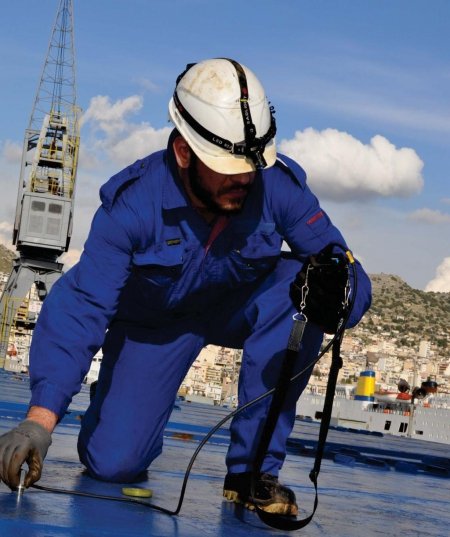
    Wind Turbine Tower Repair Services

    Qualitech’ tower services ensure that wind turbine towers have solid structural integrity while also maintaining a clean and attractive appearance, including:

    • Cleaning
    • Coating/Painting
    • Weld Inspection
    • Mast Inspection
    • Caulking
    • Dent Removal

    Wind Turbine Nacelle Repair Services

    Wind turbine nacelles serve the important role of housing the generating components of wind turbines. Qualitech’ nacelle services ensure that critical turbine componentry remains efficiently covered and protected, along with improving the physical appearance of the nacelle. Services include:

    • Cleaning
    • Composite Repairs
    • Weather Station Replacement/Repair

    Wind Turbine Blade Repair Services

    Wind turbine blades are routinely subjected to extreme operating conditions. Manufacturing defects and the stress they are routinely subjected to during normal operations can combine to accelerate blade degradation. Other damages we inspect for and repair include:
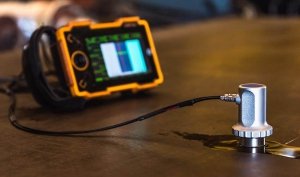
    • Leading-Edge Erosion
    • Bond-Line Failures
    • Moisture Intrusion
    • Freeze/Thaw Cycling
    • Lightning Damage
    • Transportation